Track 08 THE WEST
- Sound
- Fiddle band, caller and tapping feet
- Loudest
- Summer Saturdays and early autumn
- Best months
- Year round; festivals in summer
- Getting there
- I-26 north from Asheville to Marshall
- Bring
- Smooth-soled leather shoes and a cotton shirt
The mountain square dance and clogging
In the mountains west of Asheville, a dance is still a community event: one big ring of couples, a caller with a strong voice, and a string band that will not stop until the floor is empty.
Old-time music in the mountains was made for dancing. Long before it was played on stages, fiddle and banjo tunes filled kitchens, barns and schoolhouses on Saturday nights, with the furniture pushed back and everyone on the floor. That tradition is still alive in western North Carolina, in community halls, at outdoor dances and at festivals, and anyone willing to try can join in.
The dances here come in a few forms. There is the big circle dance, a mountain version of the square dance with one large ring of couples. There is clogging, the percussive, fast-footed dancing done by teams in matching outfits. And there is flatfooting, the loose solo step you see at jams. They share the same music and overlap in many ways, but each has its own feel.
Calling the figures: how the big circle works
A big circle dance starts with every couple holding hands in one large ring. The caller, standing by the band, calls out the moves in a strong, rhythmic voice: circle left, circle right, swing your partner, promenade. After a few figures as a whole group, the caller splits the big ring into small circles of two couples each, and the dance turns into a series of figures done in fours.
The figures have old names. In "Birdie in the Cage" one dancer stands in the middle while the others circle round; in "Chase the Rabbit" couples weave through each other; in "Dive for the Oyster" one couple ducks under the arms of the other. Each small circle works through the figure, then the couples move on to dance with the next pair, so by the end of the night you have danced with most of the room. The caller brings everyone back into the big ring for the finish.
The music never stops. The band plays one long tune, usually a fast breakdown, for as long as the dance lasts, and the dancers' feet add a rhythm of their own. Good callers time their calls to the phrases of the tune, so the moves fall naturally on the beat.
Clogging teams and the festival stage
Clogging is the most visible form of mountain dance. Teams of eight or more dancers, often in matching skirts and shirts, perform fast, precise routines in which every foot hits the floor at the same moment. Many wear metal taps on their shoes, which turn the dance into a percussion section loud enough to compete with the band. The best teams combine big circle figures with complex footwork, and their routines are rehearsed for months.
Clogging teams grew up around the mountain festivals of the twentieth century, and you will still see them at the big summer events in and around Asheville. Our guide to Asheville's street corners and summer nights describes the outdoor Saturday dances and the folk festival where teams perform.
Flatfooting is the informal cousin. Done solo, close to the floor and without taps, it is the step you see at jams and fiddlers' conventions when someone gets up beside the band. It is improvised and personal, and many older dancers have a style that is entirely their own. Our story on a Friday jam in a mountain county seat describes it in its natural setting.
Track 15 · ON THE ROADFollowing the Blue Ridge Music TrailsMadison County and the community halls
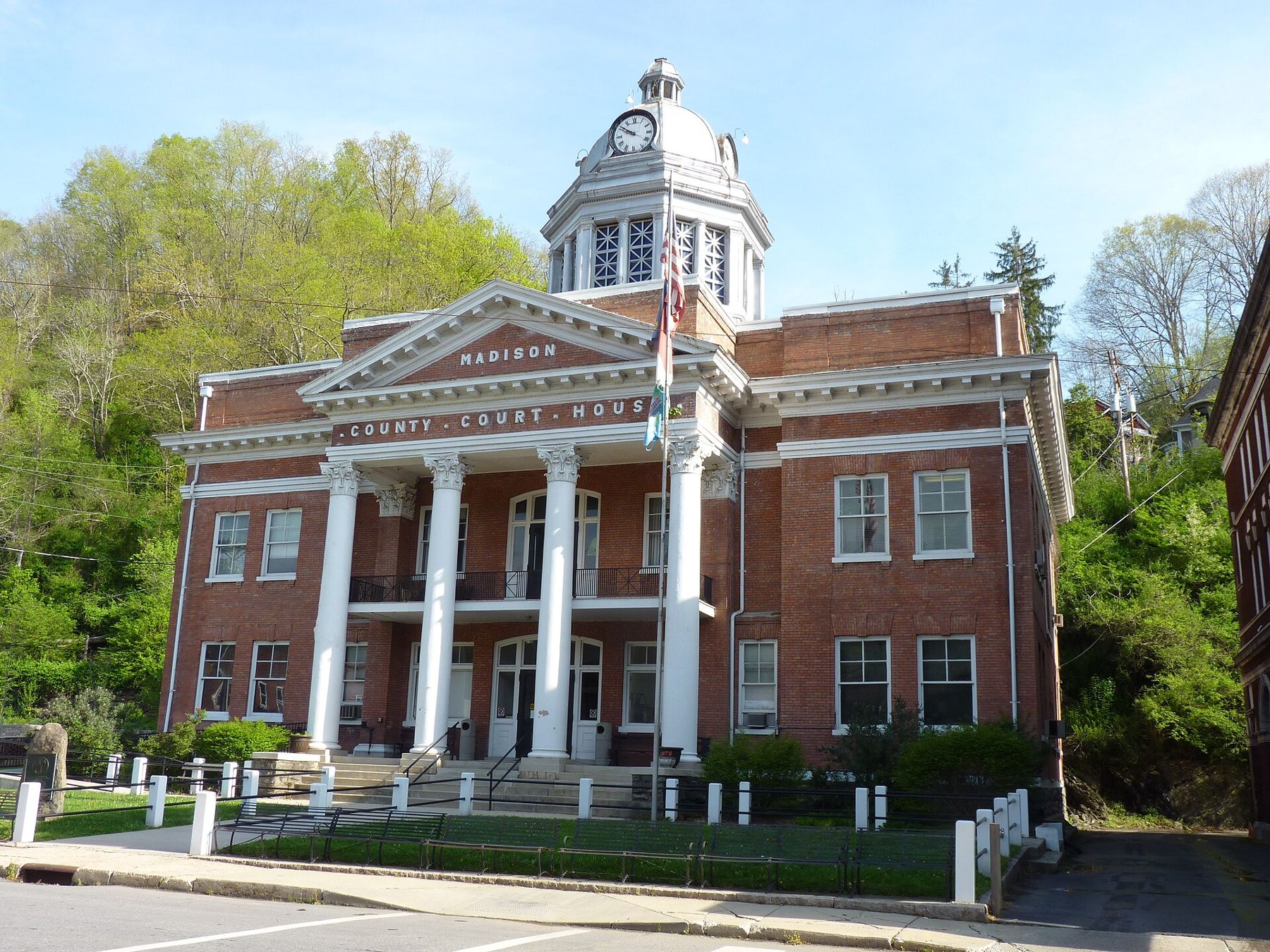
Madison County, north of Asheville along the French Broad River, is one of the heartlands of mountain music and dance. Its county seat, Marshall, is a small town squeezed between the river and a steep hillside, with its brick courthouse looking down Main Street. Further along the river, Hot Springs has long been a stop for travellers on the Appalachian Trail, and Mars Hill, home to Mars Hill University, was the birthplace of Bascom Lamar Lunsford, who founded Asheville's folk festival in 1928. An autumn festival at the university carries his name.
The county is also known for its unaccompanied ballad singing, passed down in families for generations. You may hear an old ballad sung between dances at a festival here, and it is worth stopping to listen.
Dances in Madison County and across the region happen in community centres, old schoolhouses, fire halls and grange halls, often on Saturday nights. Many are run by volunteers, and their schedules change with the seasons. Visitor centres and local arts councils keep lists, but the surest way is to ask at a jam or a festival. Check before you go.
Your first dance: joining as a beginner
Beginners are welcome at almost every community dance. The figures are simple, the caller tells you what to do, and the other dancers will steer you if you get lost. Most dances begin with an easy figure so that newcomers can find their feet.
Watch one full dance from the side before you join. Notice how the caller times the moves and how dancers swing their partners. When the next dance starts, find a partner, step into the ring at an open spot and listen to the caller. If you make a mistake, laugh and keep going; nobody minds. Partners change all the time, and it is normal to ask anyone to dance.
Stay off the floor during a clogging team's set, and do not join a team routine uninvited. At informal dances, though, anyone can flatfoot at the edge of the floor.
Footwear and what to wear
Shoes matter more than anything else. Smooth leather soles slide easily on wooden floors, which makes swinging and turning much easier. Rubber trainers grip too hard and can twist your knees. Do not wear taps unless you are with a team or the hall allows them, because they can damage the floor and drown out the music.
Wear light, comfortable clothing. Halls get hot when a big circle is going, and a cotton shirt or a light dress is better than layers. Bring water and a spare shirt if you plan to dance all evening.
Last dance: when to come
Community dances happen all year, though some halls take a break in deep winter. Summer brings the outdoor dances in Asheville and the big festivals, and early autumn is a fine time for harvest dances in the rural counties. Our guide to the festival year sets out the season, and the guide to old-time fiddle tunes around Mount Airy covers the dance music of the northern counties. Wherever you go, bring good shoes and be ready to swing.
Next on the setlist
The Piedmont blues of Durham's tobacco warehouses
A light, rolling, finger-picked blues grew up on the sidewalks outside Durham's tobacco auctions in the 1930s. The warehouses still stand, and the sound still turns up when the weather cools.
- Finger-picked guitar, harmonica and washboard
- Late summer into autumn
Mill-village music of the Piedmont
Fiddles, banjos and guitars came down from the hills with the families who took mill jobs. On the Piedmont's mill hills they turned into a faster, tighter sound made for radio.
- Fiddle, banjo and two guitars
- Early summer and autumn weekends