Track 05 HIGH COUNTRY
- Sound
- Five-string banjo in rolling three-finger patterns
- Loudest
- Spring and autumn weekends
- Best months
- Spring and autumn
- Getting there
- US 74 west of Charlotte
- Bring
- A good ear and a little time
Three-finger banjo and the Cleveland County sound
A boy from a farm near Shelby changed how the banjo is played. In his county's old courthouse, a museum now explains the rolls, the records and the foothill string bands behind them.
Listen to almost any bluegrass band and the sound that jumps out first is the banjo: a quick, glittering stream of notes, eight to the bar, so even and so fast that it sounds like a machine until you hear the tune moving inside it. That sound has a home address. It grew up in Cleveland County, in the rolling Piedmont foothills west of Charlotte, and it was carried out into the world by a farm boy from the Flint Hill community near Shelby named Earl Scruggs.
Shelby, the county seat, has built a museum around that story. You do not need to play the banjo to enjoy it, but if you do, you will leave with sore fingers and new ideas.
The roll: how three fingers make a river
The five-string banjo has four long strings and a short fifth string that starts partway up the neck and rings at a high, fixed pitch. Old-time players strike down on the strings in a style called clawhammer. Three-finger players pick upward instead, using the thumb, index and middle finger, usually with a plastic thumb pick and two metal finger picks.
The picking hand moves in set patterns called rolls. In a forward roll the thumb, index and middle fingers pluck in that order, over and over; a backward roll reverses it; an alternating thumb roll lets the thumb return between each finger. Each roll fills a beat with a steady run of notes. The trick, and the reason three-finger banjo is hard, is that the melody has to be woven into the roll. The player chooses which string each finger hits so that the tune sounds out on the strong beats while the other notes fill in around it. The short fifth string, struck by the thumb, keeps ringing through everything like a bell. Most bluegrass players tune the banjo to an open G chord, so that even the unfretted strings sound in harmony and the left hand is free to move the melody up and down the neck.
Played well, the result is a sound with enormous drive. It fills every gap in the band, pushes the tempo forward and cuts through a field full of noise. That is why bluegrass took it up so quickly, and why our guide to bluegrass in the High Country puts the banjo first.
Cleveland County before Scruggs
Earl Scruggs did not invent three-finger picking. In the foothills of the western Piedmont, several banjo players in the 1920s and 30s were already picking with three fingers, among them Snuffy Jenkins of neighbouring Rutherford County, who played the style on the radio in the 1930s. Further east, Charlie Poole, a mill worker who led one of the most popular string bands of the 1920s, used a three-finger approach of his own on his records.
This was mill and farm country, and the music grew in mill villages, at house parties and on early radio. Our story on mill-village music of the Piedmont follows that side of the history. What Scruggs did was take the local style, tighten it and make it faster, cleaner and far more complex, until it could carry a whole band.
Track 16 · ON THE ROADThe festival year, season by seasonFrom Flint Hill to the national stage
Scruggs was born in 1924 and learned the banjo as a boy from family and neighbours. In 1945 he joined Bill Monroe's band, and audiences who heard him on the radio and on stage in Nashville had never heard anything like it. Many people date the birth of bluegrass to that moment. He later formed a long-running partnership with the guitarist Lester Flatt, and their recordings, including "Foggy Mountain Breakdown", became among the best-known banjo music ever made. Film and television themes carried the sound to people who had never been near the mountains.
He also changed the instrument. He used special tuning pegs that let him slide a string down and back up in the middle of a tune, a trick you can hear on some of his best-known pieces. Banjo players still study his recordings note by note.
Inside the Earl Scruggs Center
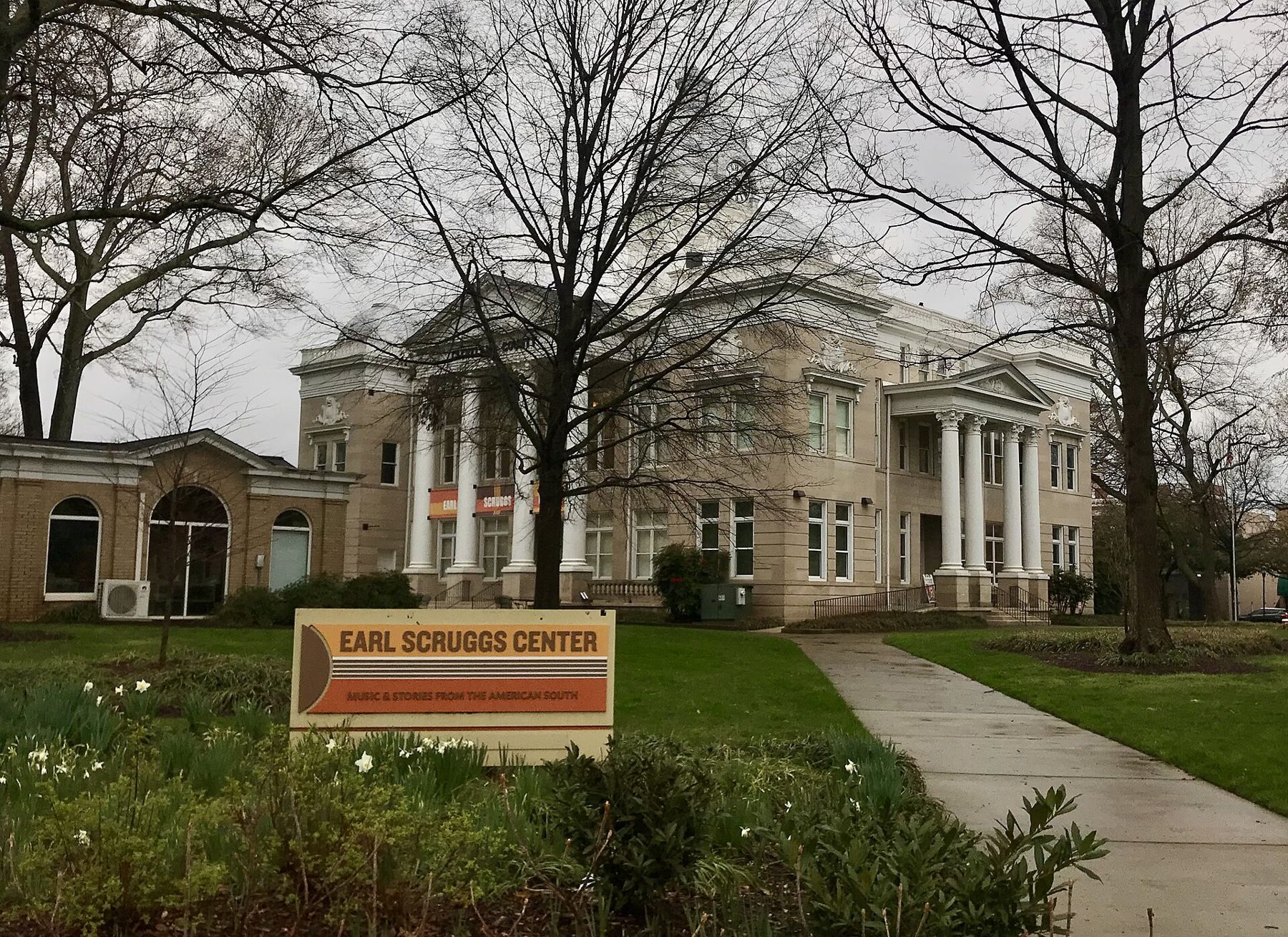
The Earl Scruggs Center occupies the old Cleveland County Courthouse, a stately building from the early twentieth century with tall columns, standing in the middle of uptown Shelby's court square. The museum tells Scruggs's story, but it is broader than one man. Exhibits cover the history of the county, the farming and textile economy that shaped it, and the music of the American South more widely.
For musicians, the most rewarding parts are the displays and listening stations that slow the banjo down and show how a roll fits under a melody. For everyone else, there are recordings, film clips, instruments and the story of how a sound from a small county travelled around the world. The centre also hosts talks, concerts and events through the year. Opening days and times can change, so check before you go.
Around the court square
Uptown Shelby is compact, and the court square makes an easy place to start a walk. Brick storefronts line the streets around it, and a short stroll away is the restored Don Gibson Theatre, named after another Shelby musician, the country singer and songwriter whose ballads became standards in the 1950s and 60s. It hosts concerts through the year, including bluegrass and country shows. Our guide to old theatres that still host Saturday shows covers similar stages across the foothills.
Cleveland County is mostly farmland and small towns, and the countryside around Flint Hill and Boiling Springs is quiet, rolling and green. There is not much to see in a formal sense, but driving the back roads gives you a feel for the place the music came from.
Last break: hearing it live
Three-finger banjo is everywhere in North Carolina bluegrass, so the best way to hear it is to go where bluegrass is played. Spring and autumn are the busy seasons, with festivals and concerts across the foothills and mountains. At a jam, stand where you can see the banjo player's right hand. Watch the fingers move in their patterns and listen for the melody inside the rolls. At summer fiddlers' conventions there is usually a separate three-finger banjo contest, which is a fine way to hear many players in one afternoon.
Next on the setlist
Old theatres that still host Saturday shows
The movie houses of the foothill towns closed their projection booths long ago, but many still fill on Saturday with string bands, gospel quartets and the people who grew up with them.
- Bluegrass bands and gospel quartets
- Saturday evenings, autumn and winter
Asheville's street corners and summer nights
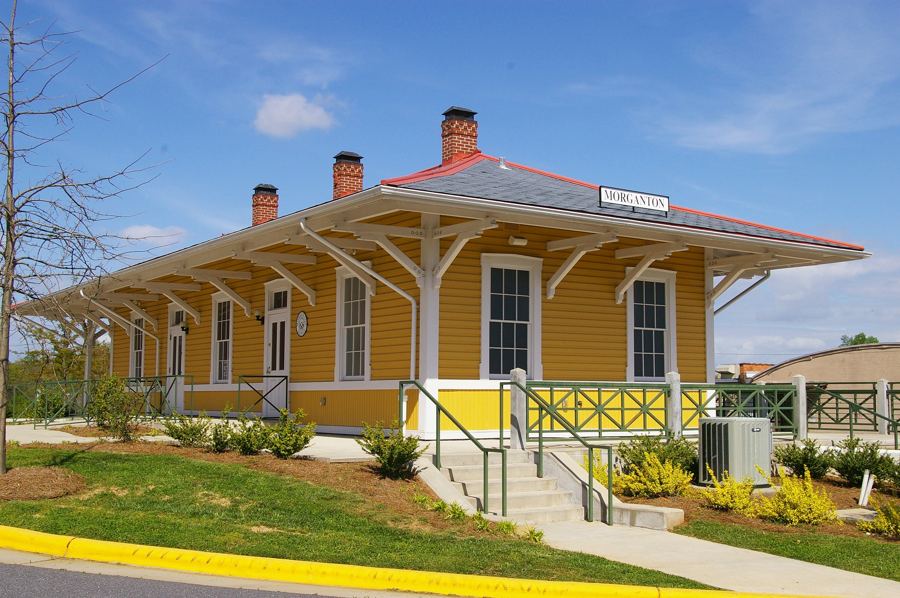
Downtown Asheville sounds different on every block: a fiddler outside a doorway, drums in a small park, a string band on a big outdoor stage. In summer, the whole centre becomes a listening room.
- Fiddles, banjos, drums and buskers
- Summer Friday and Saturday evenings