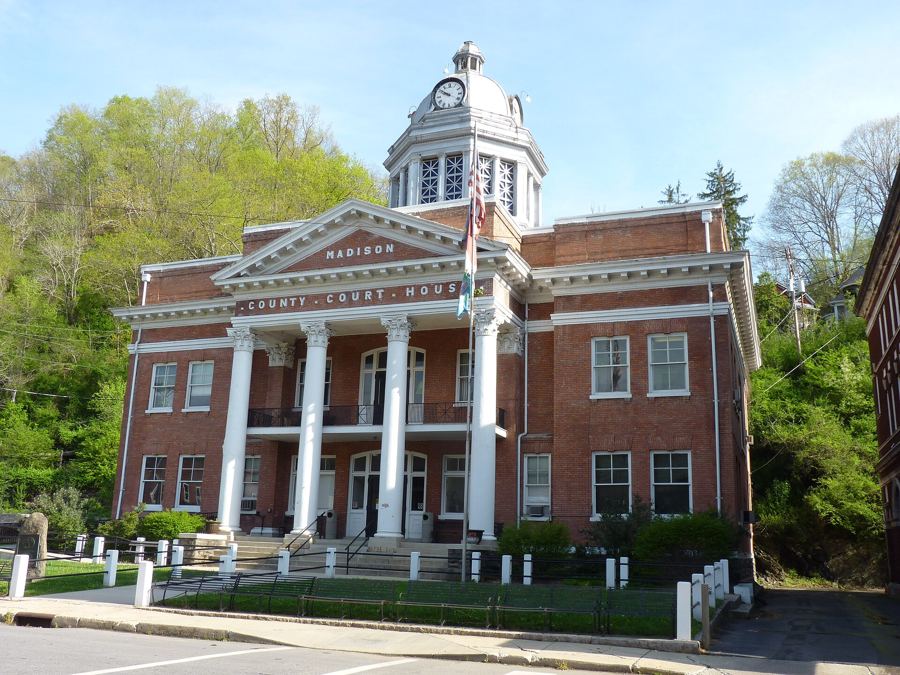
Track 06 HIGH COUNTRY
- Sound
- Bluegrass bands and gospel quartets
- Loudest
- Saturday evenings, autumn and winter
- Best months
- Year round, busiest in autumn
- Getting there
- Drive; most sit on main streets
- Bring
- A light jacket for air-conditioned halls
Old theatres that still host Saturday shows
The movie houses of the foothill towns closed their projection booths long ago, but many still fill on Saturday with string bands, gospel quartets and the people who grew up with them.
Almost every county seat in the foothills once had a movie house on its main street. They opened in the 1920s, 30s and 40s, with marquees, plaster ceilings and a few hundred seats, and for a generation they were the brightest buildings in town. Then television arrived, the malls moved out to the highway, and one by one they closed.
Not all of them stayed dark. Across the foothills and the edge of the mountains, towns and arts councils have bought and restored their old theatres, and many of them now host live music. On a Saturday you can hear a bluegrass band or a gospel quartet in a hall built for silent films, with the same seats and the same faded murals, and an audience that often includes people who saw their first picture there.
Opening number: why the old halls suit the music
These theatres were built for sound before amplification was common, and they suit acoustic music well. The rooms are small, the walls are hard and the ceilings high, so a fiddle or a voice carries to the back row without much help. Bluegrass bands, which grew up playing around a single microphone, sound especially good in them.
The size matters too. A theatre of a few hundred seats is close enough that you can see the banjo player's fingers and hear the bass without a wall of speakers. It feels like a bigger version of a front porch, which is close to what the music was made for.
Look around while the band tunes. Restorations in these towns have usually kept what they could: the sloping floor, the proscenium arch, the old lettering above the doors, sometimes a painted curtain. The seats may be new, but the room is much as earlier audiences knew it, and the music fills it the way the soundtracks of the old pictures once did.
Mount Airy: the Earle and the playhouse
The best known of these halls is the Earle Theatre on Main Street in Mount Airy, a 1930s movie house now run by the county arts council. It is the home of the town's long-running live radio broadcast on Saturday mornings, when old-time and bluegrass bands play to a small audience in the seats and to listeners across the county. The building also holds an exhibit on the area's old-time musicians. Our guide to old-time fiddle tunes around Mount Airy has more on the broadcast and the local style.
A few blocks away, the Andy Griffith Playhouse, a former school building now used by the same arts council, hosts concerts and plays through the year. Between them, the two halls give Mount Airy a fuller music calendar than most towns of its size.
The rest of the circuit: Sparta, Shelby and Morganton
Further west, up on the plateau, Sparta and the other small county seats along the Virginia line have their own rooms where bluegrass and country bands play for dancers, often on weekend nights. They are less formal than a restored theatre, more like a community hall with a stage. Our story on a Friday jam in a mountain county seat describes how those evenings work.
Track 07 · THE WESTAsheville's street corners and summer nightsSouth of the mountains, Shelby has restored a 1930s movie house on its uptown streets as the Don Gibson Theatre, named after the country singer and songwriter who grew up in the town. It hosts country, bluegrass and gospel shows through the year, and it sits a short walk from the Earl Scruggs Center, which makes a good pairing for a day in Cleveland County. Our guide to three-finger banjo and the Cleveland County sound covers the museum.
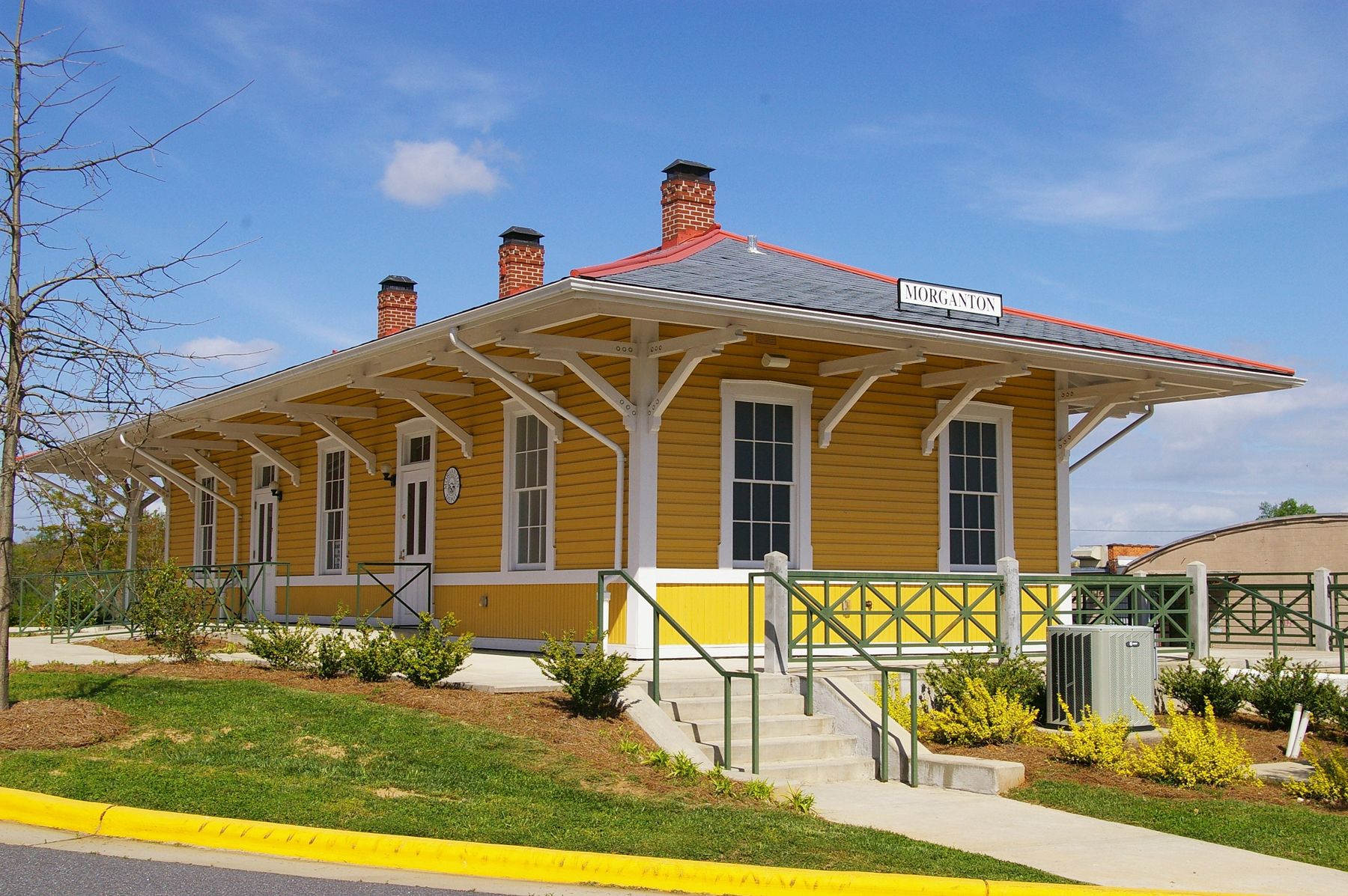
In Morganton, the Burke County seat at the foot of the Blue Ridge, the city runs a municipal auditorium that brings in touring bluegrass, gospel and country acts as well as plays and concerts. It is newer than the old movie houses, but it serves the same purpose for the town.
What a Saturday show is like
A typical Saturday evening show in one of these theatres starts early, often around seven, and finishes well before midnight. There may be one band or two, with a short break in between. The audience is mostly local and often older, with families and a scattering of visitors. People dress casually. Many have been coming for years and know the musicians by name.
Bluegrass shows usually mix fast instrumentals with old songs and a few newer ones. Gospel shows lean on close harmony, often a quartet or a family group, and the audience may join in on the hymns they know. It is common for a bluegrass show to include a gospel number or two, and for a gospel show to feature bluegrass instruments. Nobody draws a hard line between the two.
Shows are usually announced on the theatre's own calendar or through the local arts council. Programmes change through the year, and some halls go quiet in high summer when the music moves outdoors to festivals. Check before you go, especially if you are driving any distance.
Theatre manners, foothill style
The etiquette in these halls is relaxed, but a few things help. Arrive early enough to find a seat; the middle of the room usually has the best sound. Keep conversation for the break. Clapping along is welcome when the audience starts it, but let the band set the pace. Many shows end with a hymn or a slow song that everyone knows, and it is good manners to stay for it.
If you want to meet the musicians, the break and the end of the night are the times to do it. Many local players are happy to talk about their instruments and where they learned to play. Keep it brief if a line forms, and thank them for the music.
Closing hymn: pairing a show with the trail
The old theatres make good anchors for a weekend of music. Pair a Saturday morning broadcast in Mount Airy with an evening show in another town, or combine a museum visit in Shelby with a concert at the Don Gibson. In spring and autumn, when festivals fill the calendar in the High Country, a theatre show is a quieter way to end the day. Our guide to bluegrass in the High Country covers the bigger outdoor weekends.
Next on the setlist
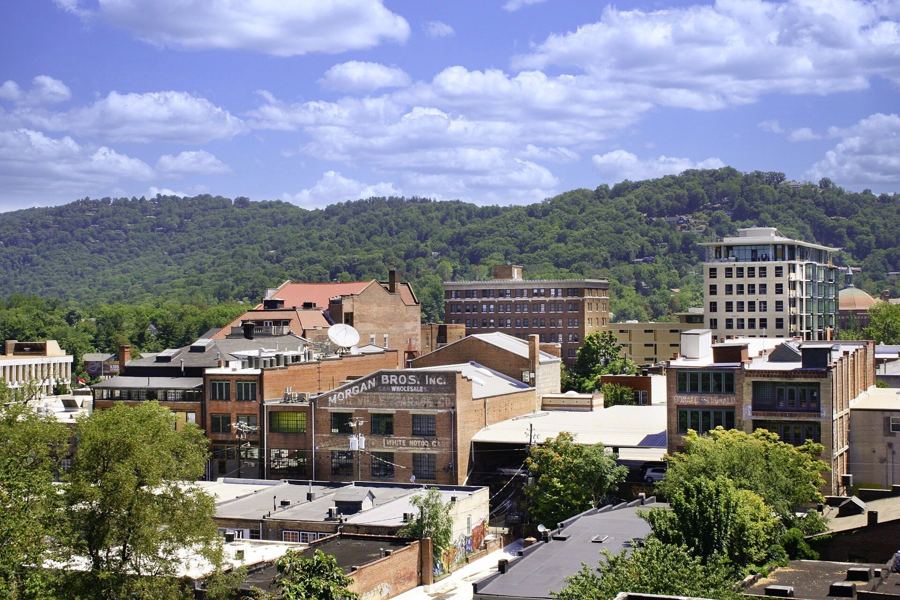
Asheville's street corners and summer nights
Downtown Asheville sounds different on every block: a fiddler outside a doorway, drums in a small park, a string band on a big outdoor stage. In summer, the whole centre becomes a listening room.
- Fiddles, banjos, drums and buskers
- Summer Friday and Saturday evenings
The mountain square dance and clogging
In the mountains west of Asheville, a dance is still a community event: one big ring of couples, a caller with a strong voice, and a string band that will not stop until the floor is empty.
- Fiddle band, caller and tapping feet
- Summer Saturdays and early autumn