Track 11 PIEDMONT
- Sound
- Brass choir playing four-part chorales
- Loudest
- Easter morning before sunrise
- Best months
- Easter, October and December
- Getting there
- Old Salem, just south of downtown Winston-Salem
- Bring
- A warm coat for a dark spring morning
Moravian brass in Old Salem
Before dawn on Easter morning, brass bands spread through Winston-Salem playing slow chorales to wake the town. It is the loudest moment in a musical tradition that began here in the 1700s.
The chorale before dawn
A Moravian chorale is a slow hymn tune harmonised in four parts. Played on brass, it sounds broad and round, with every chord held long enough to ring off the brick walls. There is no melody player showing off and no beat to tap your foot to. The parts move together like a choir breathing, and when two bands answer each other across a square, the sound seems to hang in the air.
The Moravians, a Protestant church with roots in Bohemia and Moravia, settled in the Wachovia tract of the North Carolina Piedmont in the 1750s and founded the town of Salem in 1766. Music was part of daily life from the beginning. They brought instruments, hymn books and trained musicians, and Salem became one of the most musical small towns in early America.
That musical life was not a concert culture. Hymns were sung at home, at work and in church, and instruments marked the turning points of the community's year and of each person's life. The tradition still works that way. Most of the players in today's church bands are amateurs, trained young in congregational band programmes and passing the old tunes from one generation to the next. What you hear on the street at Easter is a congregation's music, played by neighbours, not a professional ensemble on tour.
Brass in four parts
The early Moravians used trombone choirs: trombones in four sizes, from a small soprano down to a deep bass, playing the four voices of a hymn. The trombones announced festivals, greeted visitors and, by an old custom, sounded chorales from the church tower to tell the town that someone had died. Over time other brass instruments joined in, and today the church bands use trumpets, horns, baritones and tubas alongside trombones.
The Moravian Music Foundation in Winston-Salem keeps a large archive of early Moravian music, including anthems, chamber works and instrumental parts copied by hand in the eighteenth and nineteenth centuries. In the Old Salem Visitor Center, a pipe organ built in 1800 by the Moravian organ builder David Tannenberg for Home Moravian Church has been restored and is played for concerts and demonstrations.
The town as a museum
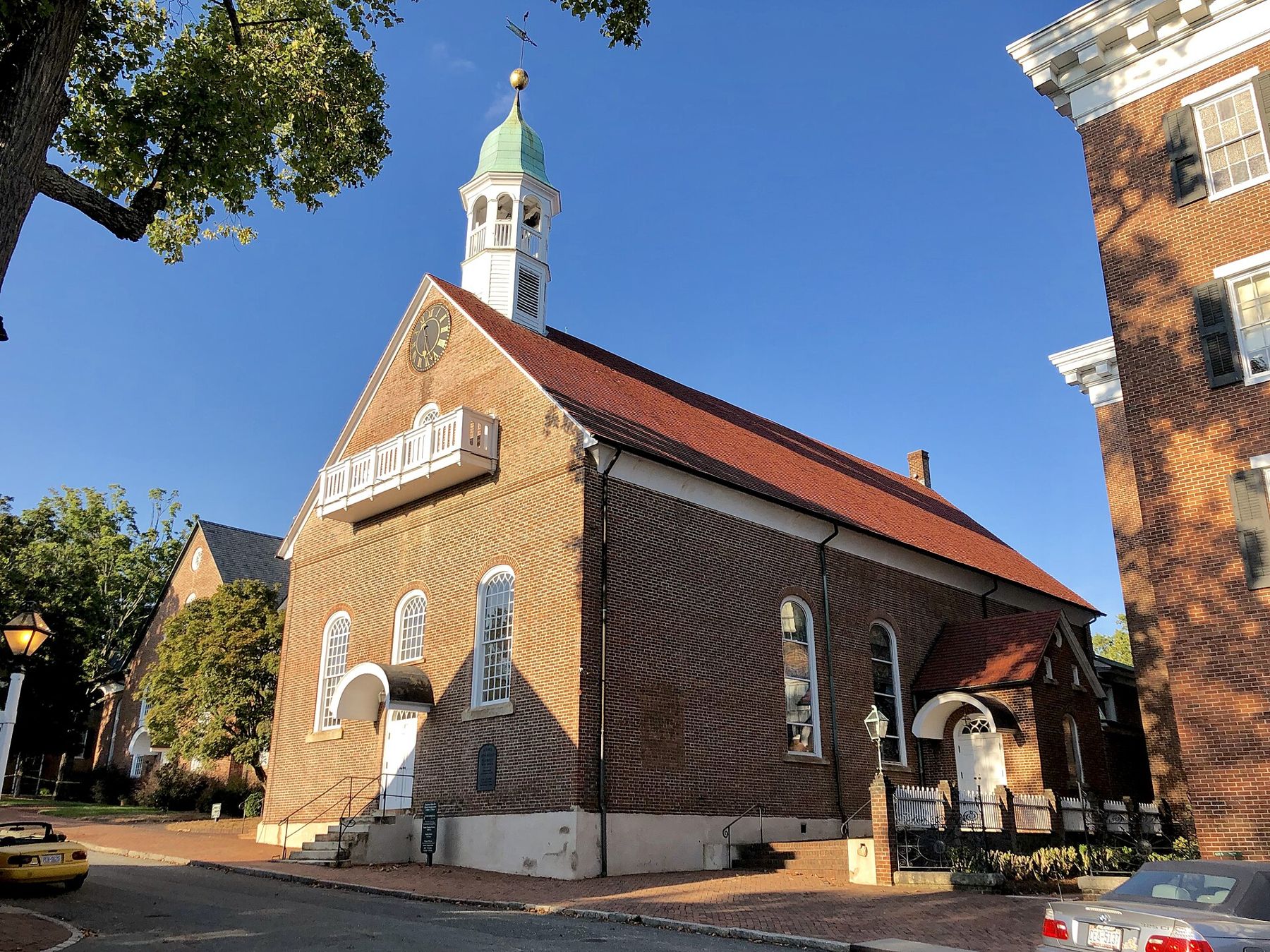
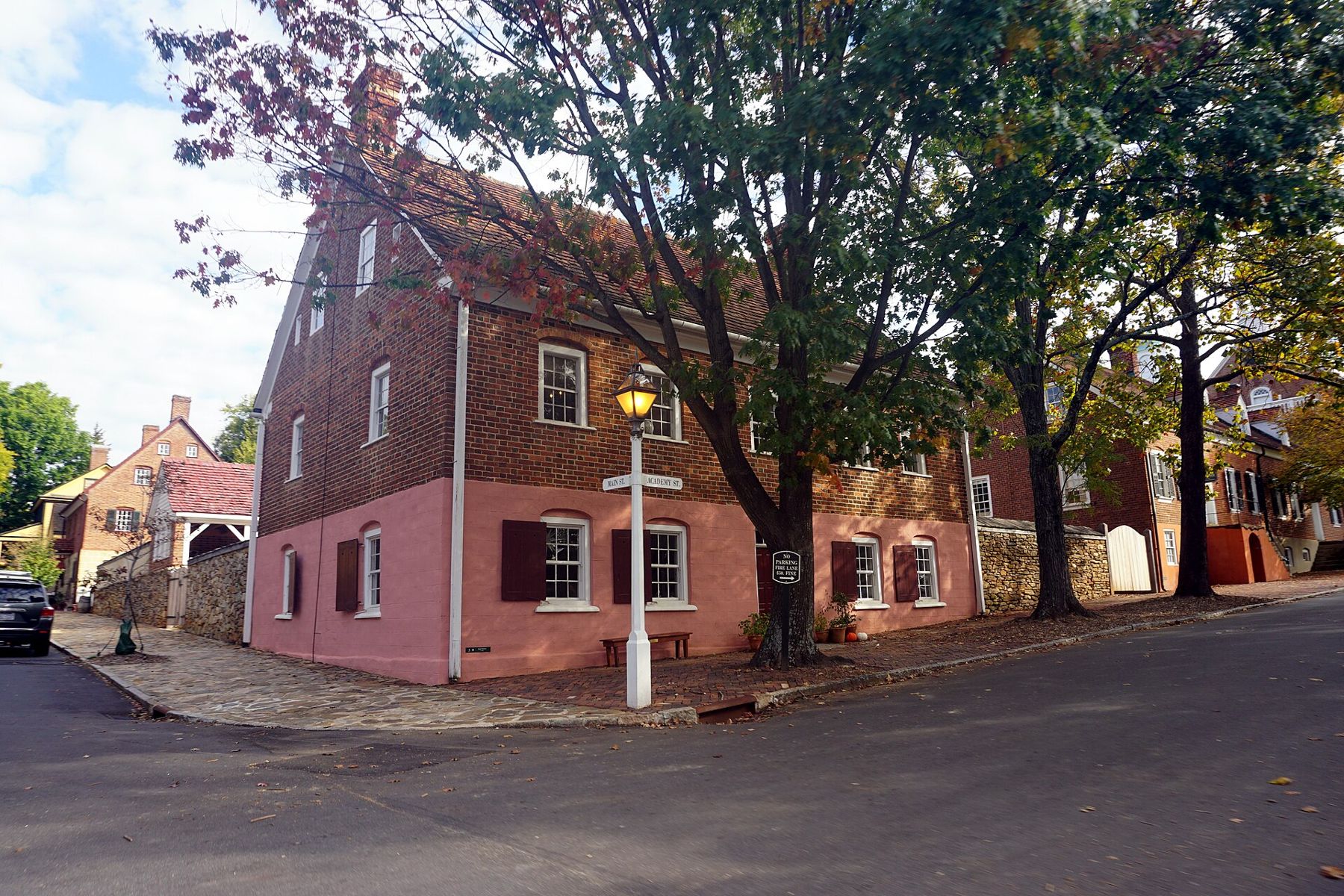
Old Salem is a historic district and living history museum just south of downtown Winston-Salem. Its streets, lined with brick and timber houses, workshops and gardens, show the town as it grew from the 1760s onward. Costumed interpreters work in the trade shops, and Home Moravian Church, built in 1800, still faces Salem Square with its clock and white belfry. Nearby, the Museum of Early Southern Decorative Arts fills out the picture of life in the early South.
Easter: the band in the dark
Salem has held an Easter sunrise service since the 1770s, and it is the event that brings the brass to full strength. In the small hours of Easter morning, groups of players spread out through the streets of Winston-Salem and play chorales on street corners, a musical wake-up call for the town. As the night ends, people gather in front of Home Moravian Church on Salem Square, and the service begins in the dark.
Track 09 · PIEDMONTThe Piedmont blues of Durham's tobacco warehousesThen the crowd walks slowly to God's Acre, the Moravian graveyard, where the plain white headstones lie flat in even rows, arranged by groups rather than by family, as a sign that all are equal in death. The band, which can number in the hundreds, is divided into sections that play back and forth to each other as the crowd moves and the sky lightens. The service ends as the sun comes up over the graves.
Easter falls on a different date each year, and the exact times and arrangements are set by the church. Thousands of people come, parking is limited, and the old streets fill early, so check the details before you go and plan to walk in.
Lovefeast and candle
The lovefeast is a Moravian service of song with a simple shared meal, usually a sweet bun and coffee, served to the congregation in their seats while the choir and instruments play. It is held at several points in the church year, but the best known is at Christmas, when worshippers are handed beeswax candles trimmed with red paper and the church fills with candlelight during the final hymn.
December is the second big season for music in Old Salem. Brass bands play in the streets, the windows show the many-pointed Moravian star, and the town's buildings are dressed for the season. Many Christmas events are public, some have limited space, and the calendar changes each year, so check before you go.
Between the chorales, on foot
Outside the big festivals, you can still hear Moravian brass in Old Salem. Bands play for church services, community events and occasional outdoor concerts, and the visitor center hosts organ demonstrations and talks. Walk from the visitor center up Main Street to Salem Square and on to God's Acre, and you have covered the ground where the music has been played for two and a half centuries.
- Salem Square, the open green at the centre of the town, faced by Home Moravian Church.
- Main Street, lined with the town's oldest houses and shops.
- God's Acre, the graveyard at the north end of the old town.
- The visitor center, with the Tannenberg organ and exhibits on Salem's history.
Coda
The Moravian brass is the opposite of the fiddle and banjo music that dominates the rest of this guide. Nobody dances to it, nobody calls out a request, and a good performance is one in which you cannot pick out a single player. That is exactly why it is worth hearing. If you are planning a year of North Carolina music, our festival year, season by season shows how Easter and Christmas in Old Salem fit with spring bluegrass and summer conventions.
For a very different Piedmont sound in the same mill-and-tobacco country, see mill-village music of the Piedmont. And if you like hearing music in historic buildings, old theatres that still host Saturday shows will take you west into the foothills.
Next on the setlist
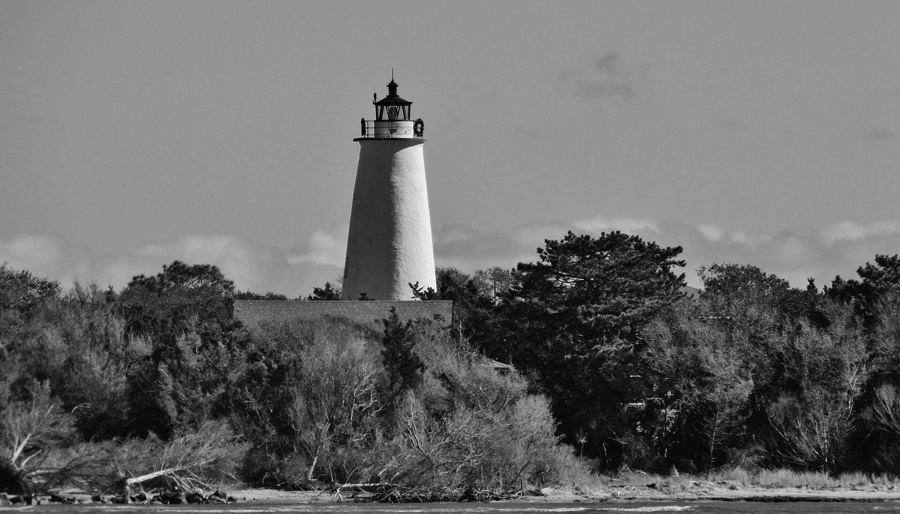
Ocracoke's island music
At the far end of a ferry ride, a village of a few hundred families keeps its own songs, its own way of talking and a habit of playing music on the porch after dark.
- Island guitars, fiddle and old ballads
- Early summer evenings
Beach music and the shag
A medium shuffle, a horn section, a vocal group singing about summer, and couples sliding their feet across a wooden floor. That is beach music, and the southern beaches still dance to it.
- Shuffle rhythm and blues with horns
- Summer evenings by the water