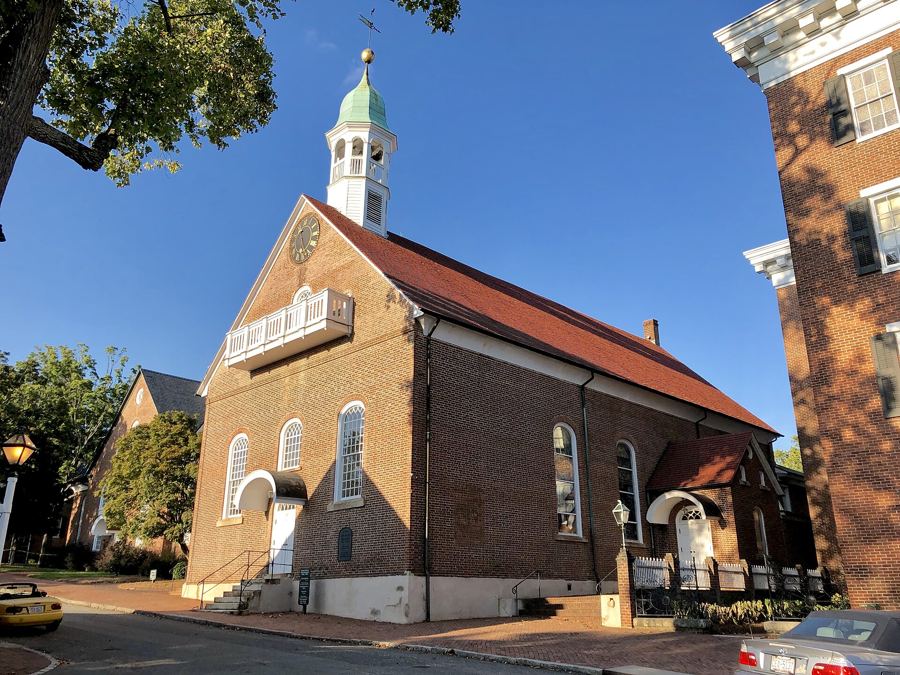
Track 09 PIEDMONT
- Sound
- Finger-picked guitar, harmonica and washboard
- Loudest
- Late summer into autumn
- Best months
- September and October
- Getting there
- Downtown Durham, off the Durham Freeway
- Bring
- Walking shoes and a guitar if you play
The Piedmont blues of Durham's tobacco warehouses
A light, rolling, finger-picked blues grew up on the sidewalks outside Durham's tobacco auctions in the 1930s. The warehouses still stand, and the sound still turns up when the weather cools.
Key of E: how the Piedmont blues sounds
Put a Delta blues record next to a Piedmont one and the difference is in the right hand. The Delta player leans on one heavy bass note and lets the slide moan over it. The Piedmont player keeps the thumb walking steadily between two bass strings, like a stride pianist's left hand, while the fingers pick a bouncing melody on top. The result is lighter, quicker and more cheerful than people expect from the word blues. Chord changes borrow from ragtime and from the songs people danced to before the First World War, so you hear circle progressions, passing chords and turnarounds that land with a little wink.
The style belongs to the whole stretch of rolling country between the mountains and the coastal plain, from Virginia down through the Carolinas into Georgia. Durham has a special claim on it because so many of the players who recorded it in the 1930s lived, worked and busked here. A guitar was the core, often with a harmonica wailing over the top and a washboard keeping time. Songs were about work, money, trains, rent and romance, and many were meant for dancing in a front room on a Saturday night.
Names you will hear
Blind Boy Fuller is the name that comes up first. He made his home in Durham and recorded a long run of sides between 1935 and 1940, before his death in 1941. Rev. Gary Davis, a far more complex guitarist who later moved to New York and taught a generation of folk revival players, spent part of the 1930s here too. Their records were made in northern studios, but the songs were worked out on Durham pavements.
Track two: the warehouse district
Durham grew on bright-leaf tobacco. The city's nickname, the Bull City, comes from a nineteenth-century tobacco brand, and by the early twentieth century its factories were turning out cigarettes by the billion. Every autumn farmers drove their cured leaf into town for the auctions. Sale days meant crowds with cash in their pockets, and blues players worked the streets outside the warehouses, playing for coins from farmers and factory hands alike.
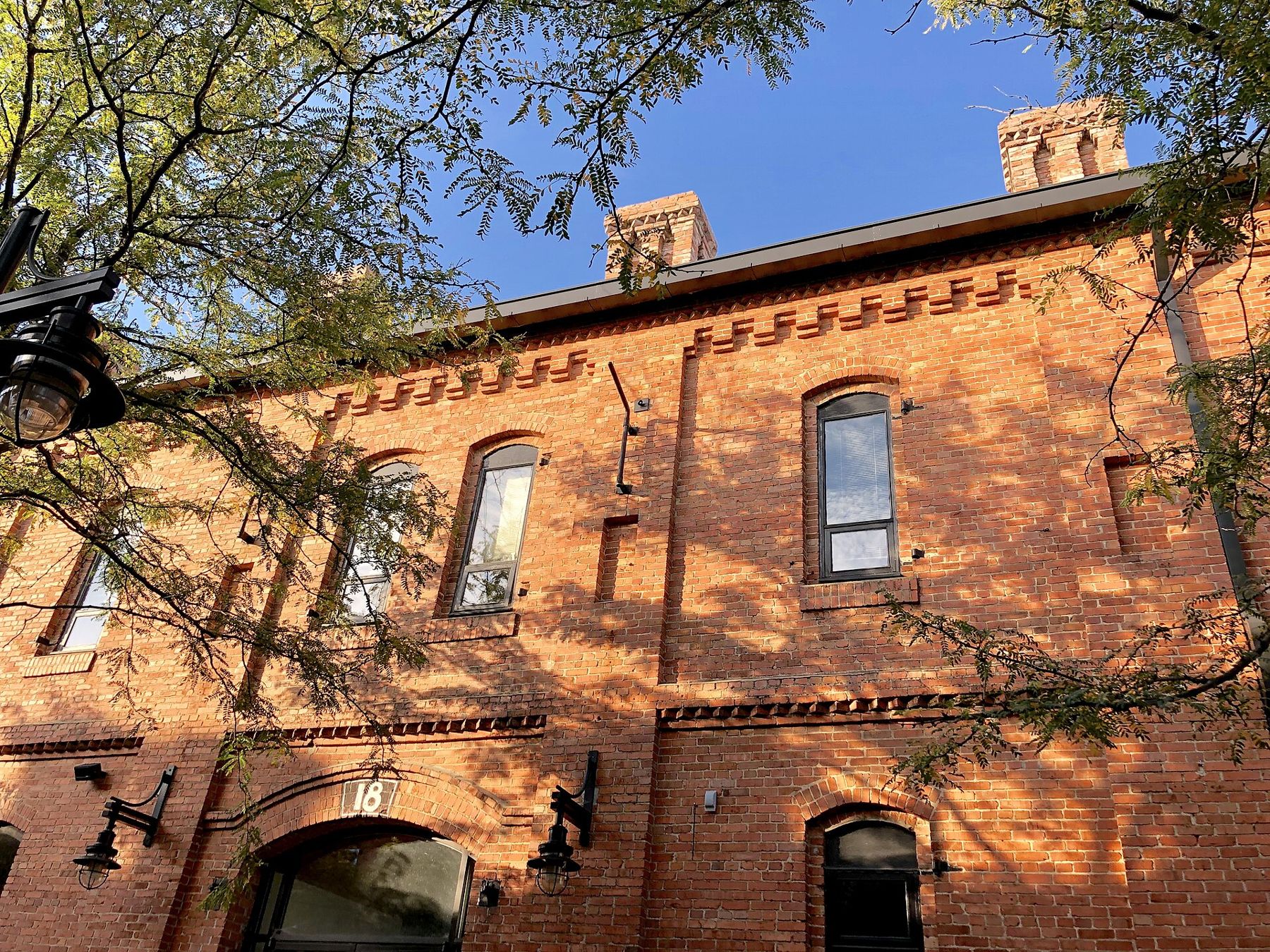
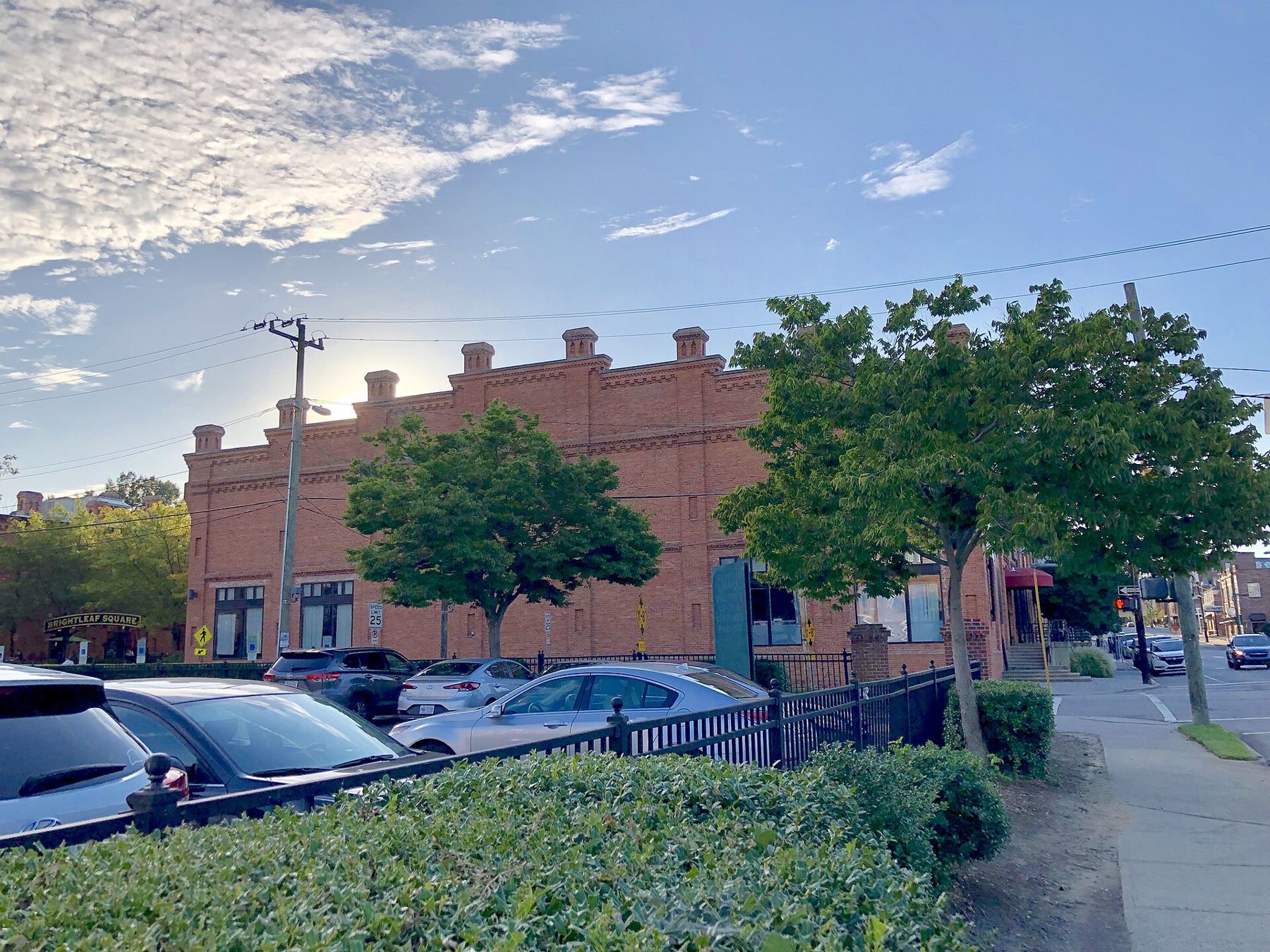
The brick buildings from that era are still the frame of the city. Brightleaf Square, on Main Street at Gregson Street, is a pair of long warehouses built in the early 1900s to store and age tobacco, with ornate brick chimneys marching along the rooflines and a courtyard between them. Walk the length of both buildings and you see how much space a single season's leaf needed.
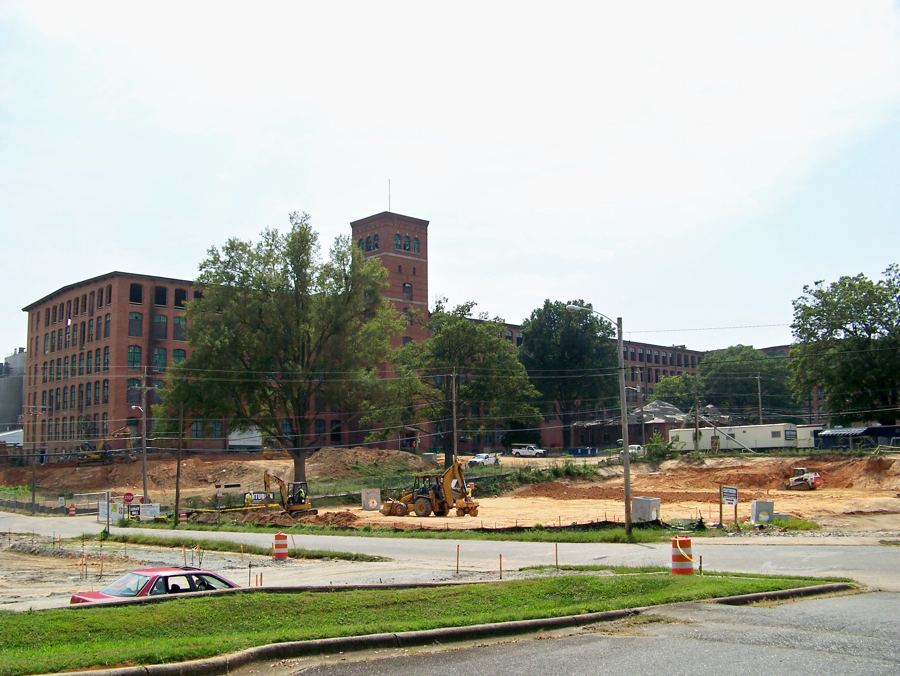
South of the centre, the American Tobacco Campus fills a former cigarette factory complex with offices and public space around a long lawn and a channel of water. Its water tower and smokestack are landmarks you can steer by. In warm months the lawn hosts outdoor music, from jazz to bluegrass to blues; schedules change every year, so check before you go. Standing on the grass with the old factory walls around you, it is easy to imagine the shift whistle and the noise of the machines.
The warehouses still stand, and on a cool autumn evening the thumb-picked bass still walks.
The warehouses still stand, and on a cool autumn evening the thumb-picked bass still walks. You will not find a plaque on every corner where a musician once played. What you find is the scale of the place, the brick, and the distances that a player with a guitar on his back would have covered in a day.
Hayti and Parrish Street
Much of the music lived in Hayti, the African American community that grew up just south of downtown after the Civil War. By the early twentieth century it had its own churches, schools, theatres, doctors and shops. Not far away, Parrish Street became known as Black Wall Street for the banks and insurance companies founded there. Many of the people who heard the Piedmont blues first heard it in Hayti's houses, churches and street corners.
Track 10 · PIEDMONTMill-village music of the PiedmontUrban renewal and the Durham Freeway cleared most of Hayti in the 1960s and 1970s. One survivor is the old St. Joseph's AME Church, a red-brick landmark from the 1890s on Fayetteville Street, which now serves as the Hayti Heritage Center. It is the place to start if you want the story of the neighbourhood rather than just its music, and it has long staged concerts, lectures and blues programmes. A festival under the Bull City Blues name has been held there and nearby in many years, usually as summer turns to autumn, but its format and dates move, so check before you go.
The set list for an autumn day
You can walk the whole story in an afternoon. The distances are short, and every stop has somewhere to sit.
- Start at Brightleaf Square and walk around both warehouses, then cross into the courtyard.
- Head east along Main Street past the old factory buildings into the downtown centre, with a detour down Parrish Street.
- Continue south to the American Tobacco Campus and its lawn.
- Cross under the freeway to the Hayti Heritage Center on Fayetteville Street.
- Finish at the Carolina Theatre if a concert is on, or at North Carolina Central University's campus a little further south.
Autumn is the right season. The heat breaks in late September, the leaves turn, and that was the time of year when the warehouses filled. Spring is a good second choice. High summer is humid, and you will want an early start.
Hearing it now
The Piedmont blues did not vanish when its first recording stars died. Through the folk revival and after, players kept it alive in North Carolina and Virginia, and today you hear it at blues festivals, at folk concerts in the Triangle's public theatres and university halls, and in the hands of young guitarists who have learned it note for note. Some of Durham's public summer programmes include acoustic blues nights. Elizabeth Cotten's very different, gentle style grew up a few miles away, in the mill town of Carrboro, and makes a natural companion; she has her own chapter in our guide to mill-village music of the Piedmont.
If you want to hear the same thumb-and-finger idea pushed in another direction, the banjo players of the foothills built their own three-finger roll on a related principle; see three-finger banjo and the Cleveland County sound. For the mountain side of the state's string music, start with old-time fiddle tunes around Mount Airy.
Playing it yourself
If you play guitar, bring it. The style is learnable at home but makes more sense when you watch a good picker's hands from a few feet away. Tune to standard, play in E or C to begin, and practise keeping the thumb going on its own until you can talk over it. Then let the fingers find the melody. Workshops are sometimes offered around festival weekends, and acoustic jams in the Triangle welcome a quiet extra guitar if you ask before joining.
For the year's other music, from spring bluegrass to winter hall jams, our festival year, season by season puts Durham's autumn blues weekend in context with the rest of the state.
Next on the setlist
Mill-village music of the Piedmont
Fiddles, banjos and guitars came down from the hills with the families who took mill jobs. On the Piedmont's mill hills they turned into a faster, tighter sound made for radio.
- Fiddle, banjo and two guitars
- Early summer and autumn weekends
Moravian brass in Old Salem
Before dawn on Easter morning, brass bands spread through Winston-Salem playing slow chorales to wake the town. It is the loudest moment in a musical tradition that began here in the 1700s.
- Brass choir playing four-part chorales
- Easter morning before sunrise