Track 12 THE COAST
- Sound
- Island guitars, fiddle and old ballads
- Loudest
- Early summer evenings
- Best months
- May, June, September, October
- Getting there
- Free state ferry from Hatteras Village
- Bring
- A light jacket, bug spray and a small instrument
Ocracoke's island music
At the far end of a ferry ride, a village of a few hundred families keeps its own songs, its own way of talking and a habit of playing music on the porch after dark.
Tuning to the tide
Ocracoke is a thin barrier island of sand, marsh and live oak at the southern end of the Outer Banks, and its music sounds like the place: unhurried, a little salty, and built for a few people sitting close together. You hear guitars and a fiddle, sometimes a mandolin or a harmonica, playing old ballads, sea songs, fiddle tunes, gospel and newer songs written on the island. The singing is plain and close to speech. Nobody needs an amplifier when the only other sound is wind in the yaupon.
The island was cut off for most of its history. Until the middle of the twentieth century, there was no paved road and no regular car ferry, and people reached it by boat. That isolation kept old habits alive, including the way islanders talk. The Ocracoke brogue, with its rounded vowels and old words, has long fascinated visitors and linguists; high tide comes out sounding something like hoi toide. You hear the same unhurried rhythm in the island's songs.
Crossing over: the ferry as overture
Getting there is part of the experience. From the north, North Carolina 12 runs down Hatteras Island to Hatteras Village, where the state runs a free car ferry across Hatteras Inlet. The crossing takes about an hour, and in summer there is often a wait in the ferry lanes. From the south and west, longer toll ferries run from Swan Quarter and Cedar Island across Pamlico Sound. Schedules, reservations and fares change with the season and the weather, so check before you go.
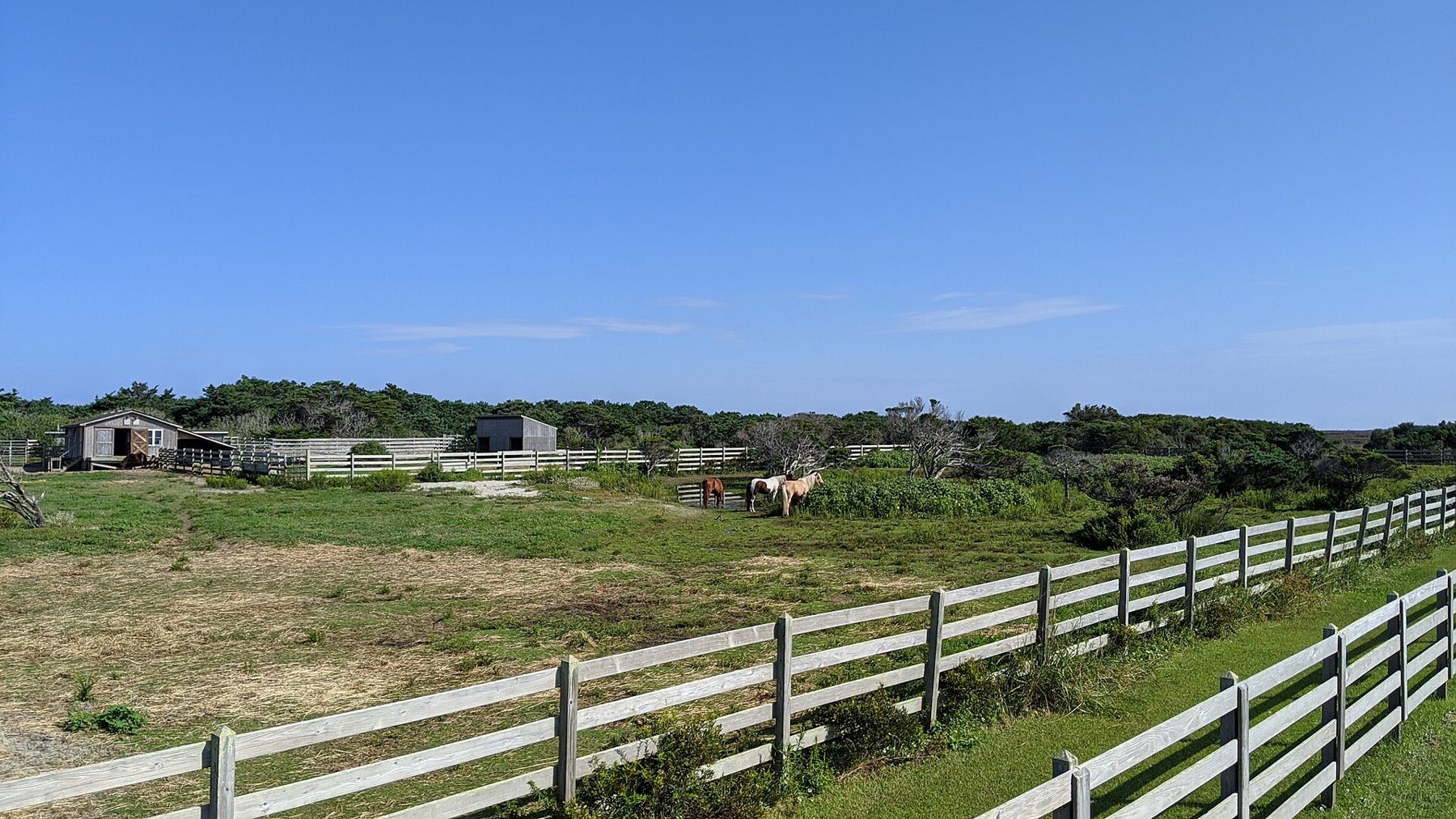
Once you land at the north end, North Carolina 12 runs for roughly a dozen miles through dunes and marsh to the village at the other end of the island. Almost all of that land is part of Cape Hatteras National Seashore, which keeps the beaches undeveloped and wide open. Halfway down, the Ocracoke Pony Pens hold a herd of banker ponies, descendants of horses that lived wild on the island for centuries, now cared for by the National Park Service.
The village and the light
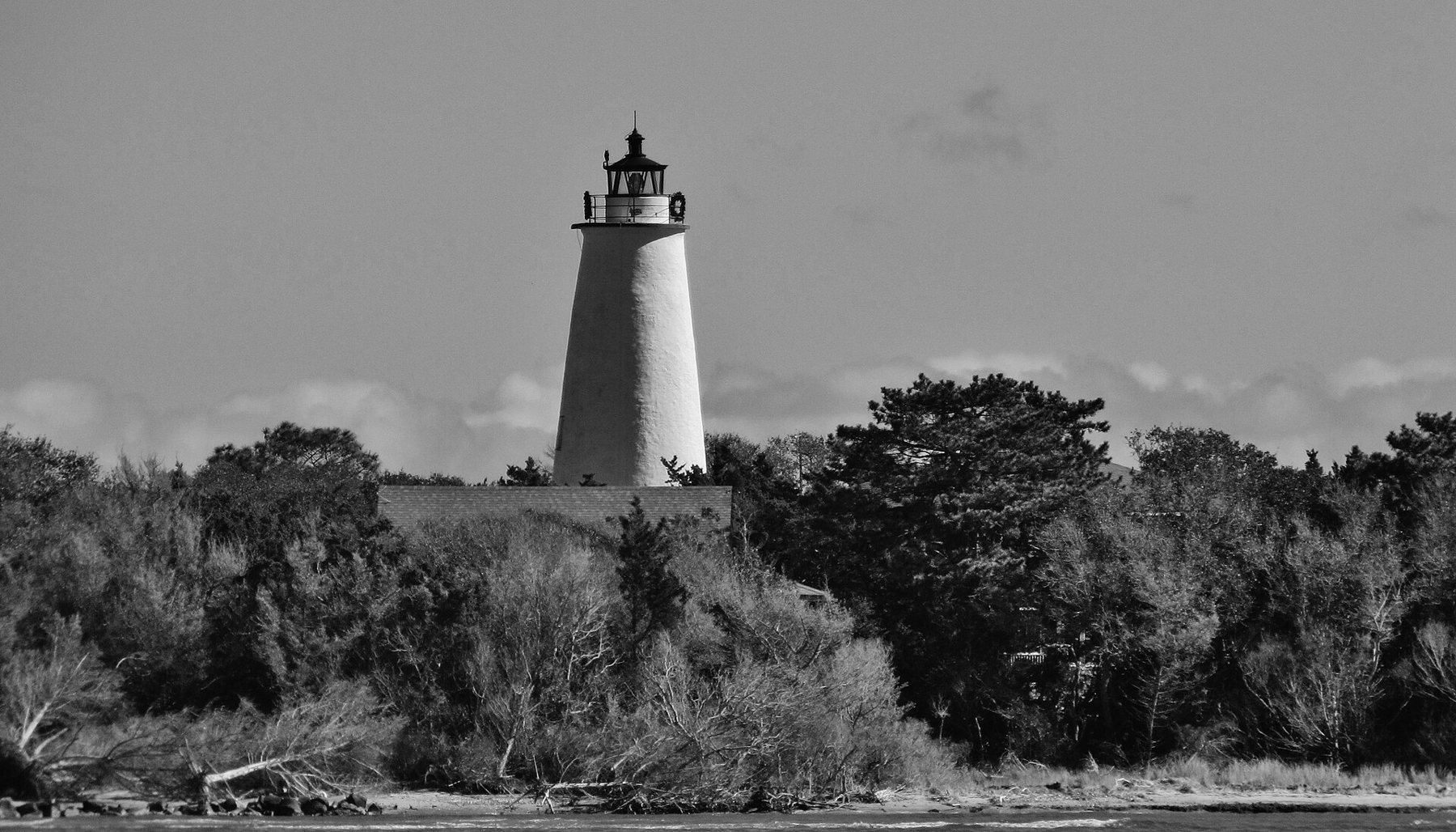
Ocracoke village wraps around Silver Lake, a round harbour where fishing boats and ferries tie up. Narrow lanes run under the live oaks between old frame houses, small cemeteries and gardens. Walk or bike; the village is small, and you will find more music on foot than from a car.
The Ocracoke Lighthouse, a whitewashed tower built in 1823, stands on the south side of the village. It is the oldest lighthouse still working in North Carolina, and its light still guides boats through the inlet. You can walk to its base along a short boardwalk. Near the ferry docks, the Ocracoke Preservation Society's museum, in an old island home, tells the story of island families, fishing, storms and the brogue. On the edge of the village, the small British Cemetery holds the graves of Royal Navy sailors washed ashore from a ship torpedoed off the island in 1942.
A day built around the evening
Music on Ocracoke happens late, so plan the day backwards from it. Take a morning ferry and the long empty drive down the island, with a stop at the pony pens and a swim at one of the lifeguarded beaches of the seashore in summer. Spend the afternoon walking the lanes around Silver Lake, visiting the lighthouse and the museum, and watching the ferries and fishing boats come in. As the light goes, the village gets quieter and cooler, and that is when the guitars come out.
If you only have one day, check the last ferry back before you start listening. Missing it is a common mistake, and on a busy summer weekend there may be no room to stay. A night on the island is far better: you will hear more music, and you will see the lighthouse shining steadily over the dark village.
Porch sessions and island bands
Island music has always been homemade. Families played at dances, weddings and church gatherings, and for each other on the porch on a summer night. A few families kept the old tunes and ballads going through the twentieth century, and in recent decades island musicians have built a lively scene of songwriters and small bands who play regularly in the village, especially in the warm months.
Track 13 · THE COASTBeach music and the shagThe heart of it is still the porch session. On a summer evening, a few players gather and run through songs, and passers-by stop to listen. Some sessions are public and announced, held at community spaces in the village; others are private. The difference matters. Listen from the lane, and if someone waves you in, sit down and stay quiet until a song ends. If you play, bring a small instrument, ask before joining, and follow rather than lead.
Nobody needs an amplifier when the only other sound is wind in the yaupon.
The island also hosts a music and storytelling festival in early summer, with island players and visiting musicians, and smaller concerts through the season. Dates, places and formats change every year. Check before you go, and expect lodging to fill early on festival weekends.
What to listen for
- Ballads with long verses about shipwrecks, storms and the sea, sung without much ornament.
- Fiddle and guitar tunes with a gentle swing, closer to the coastal dance music than the hard-driving mountain style.
- Newer songs about island life, ferries, hurricanes and the fishing year, written by islanders.
Hurricanes, ferries and the off-season
Ocracoke's year is ruled by weather. Summer is busy, with the most music and the most visitors, warm water and heavy afternoon thunderstorms. Hurricane season runs from early summer to late autumn and peaks from August into October; when a storm threatens, visitors are ordered off the island, and the ferries can stop. In 2019 a hurricane pushed a surge of water through the village, and many homes and buildings had to be rebuilt.
The shoulder seasons are the sweet spot. In late spring and in September and October, the water is warm, the crowds are thinner, and music still runs in the village on many evenings. Winter is quiet, many businesses close, and the island goes back to its year-round residents; you may find a session at a community gathering, but do not count on it.
Last set
Ocracoke's music is small, local and seasonal. That is its whole point, and it makes the journey worth the time. Ride the ferry, walk the village at dusk, and follow the sound of a guitar to a porch.
The island fits into a longer coastal trip. Farther south, the beach towns around Wilmington keep a very different summer sound, with dancing to match; see beach music and the shag. Inland, the coastal plain has its own deep musical history, gathered on Eastern North Carolina's music trails. And if a porch session leaves you wanting more, a mountain county seat on a Friday night is the closest thing to it at the other end of the state; read a Friday jam in a mountain county seat. For the year as a whole, see the festival year, season by season.
Next on the setlist
Beach music and the shag
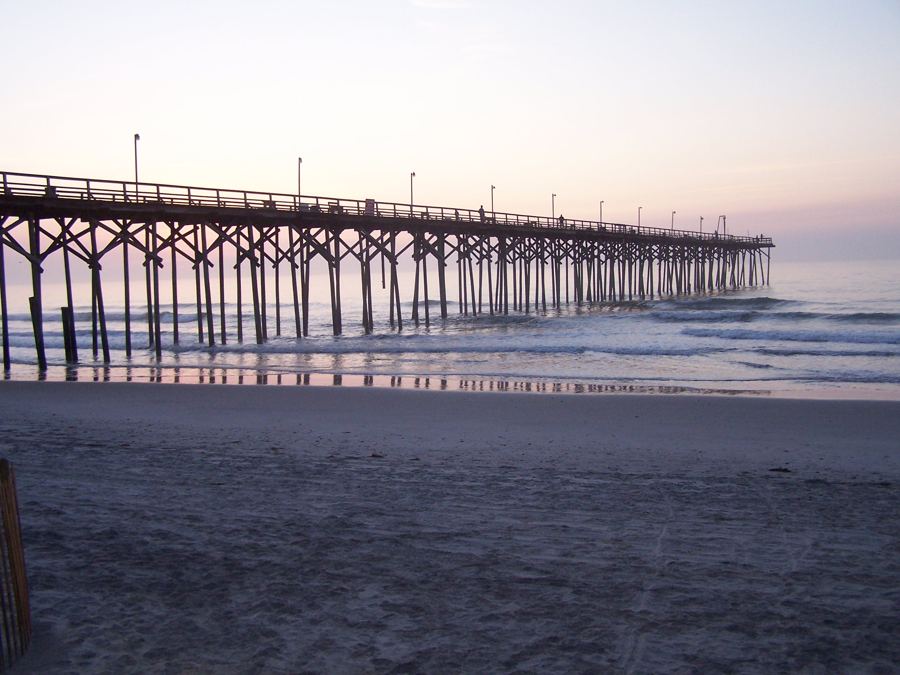
A medium shuffle, a horn section, a vocal group singing about summer, and couples sliding their feet across a wooden floor. That is beach music, and the southern beaches still dance to it.
- Shuffle rhythm and blues with horns
- Summer evenings by the water
Eastern North Carolina's music trails
Jazz pioneers, gospel quartets and the horn players who gave funk its punch came out of the small tobacco towns of the coastal plain. A signed trail ties their stories together.
- Jazz, gospel, funk and rhythm and blues
- Summer and autumn weekends