Track 03 THE RIDGE
- Sound
- Fiddle, banjo, guitar and bass
- Loudest
- Summer Friday nights
- Best months
- May to October
- Getting there
- US 21 or the Blue Ridge Parkway
- Bring
- Smooth-soled shoes, a jacket and your instrument
A Friday jam in a mountain county seat
Up on the plateau along the Virginia line, the week ends with fiddles, guitars and a few dancers in a public room on the main street. Anyone can listen, and many join in.
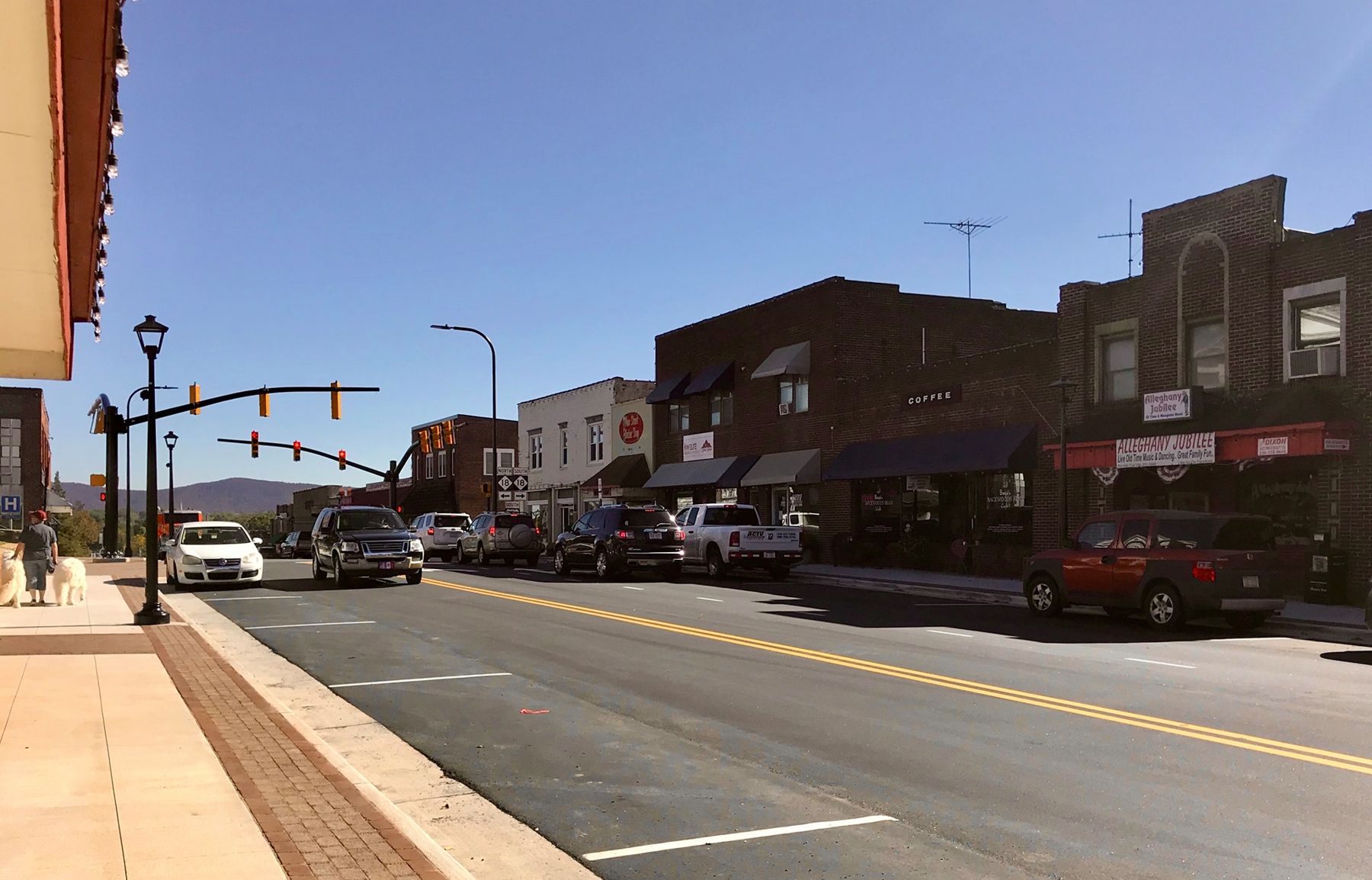
Sparta is the county seat of Alleghany County, a small town on a high, rolling plateau where the Blue Ridge flattens out before it drops into Virginia. There is a courthouse, a main street, a few churches and a lot of open farmland in every direction. On a summer Friday evening, though, you can often hear a fiddle from the sidewalk, and if you follow it you will find a room full of people who have come to play, listen and dance.
These weekly jams are the everyday side of mountain music. They are not concerts and they are not festivals. They are gatherings that happen because people want them to, and they have been going on, in one room or another, for longer than anyone can quite remember.
Tuning up: two counties on the plateau
Alleghany and Ashe counties sit side by side along the Virginia line, with the Blue Ridge Parkway running along their southern edge. Sparta is the only town of any size in Alleghany. In Ashe, the courthouse is in Jefferson, but the busier town is West Jefferson, just to the west, with a main street of brick buildings and murals. Between them the two counties have a deep string-band tradition, closer to the old-time sound of Mount Airy than to the bluegrass of Boone, though you will hear both.
The plateau is high enough that summer evenings stay cool, which is part of why the jams are busiest from late spring to early autumn. In winter the roads can be icy and some gatherings move indoors or take a break altogether.
Who plays and how the circle works
A typical jam has a core of regulars: a fiddler or two, a banjo player, two or three guitars, a bass and sometimes a mandolin. They sit in a loose circle, often near the front of the room. Around them are the people who drop in, from retired farmers who have played all their lives to teenagers who learned from a grandparent and visitors who carry an instrument in the boot of the car just in case.
Old-time and bluegrass have different rules, and many jams mix both. In an old-time set everyone plays the tune together, over and over, and nobody takes a solo. In a bluegrass set the lead passes around the circle, each player taking a break before handing it on. Singers step in for songs, often old gospel numbers or ballads everyone knows. The leader of the moment will look round the circle to see who is ready. If you play and are not sure, watch for a nod.
The sound in the room is close and unamplified, or nearly so. You hear the scrape of the bow, the thump of the bass and the slap of shoes on the floor all at once, and the music is pitched for a room rather than a field. Tunes come from a shared stock that every regular knows by heart: breakdowns for dancing, slower waltzes towards the end of the night, and a gospel song or two that brings the whole room in on the chorus.
Track 02 · THE RIDGESummer fiddlers' conventions, explainedThe dance floor
Where there is room, someone will dance. The local step is flatfooting, a relaxed, close-to-the-floor shuffle that adds a percussion part to the band. It is different from the precision clogging you see from organised teams, which our guide to the mountain square dance and clogging explains. Flatfooting is individual and loose. Older dancers often have a style all their own, and children pick it up just by watching.
You are welcome to join, even as a complete beginner. Stand at the edge of the floor, feel the beat from the banjo, and start with small, quiet steps. Smooth leather soles help; rubber trainers grip the floor and make it harder. Do not wear taps unless you know the room allows them, and give the experienced dancers space.
Finding a jam this week
Jams in both counties move between public rooms, community centres and small music halls, and their nights can change from one season to the next. Friday is the most common night across the plateau, but some gatherings meet earlier in the week or on Saturday afternoons. The county visitor centres keep up-to-date lists, and the signs of the Blue Ridge Music Trails mark many of the regular venues. Always check before you go.
If you are building a longer trip, it makes sense to pair a weekday jam here with a Saturday morning at the radio broadcast in Mount Airy, about an hour to the east. Our guide to old-time fiddle tunes around Mount Airy covers that end of the road, and the story on old theatres that still host Saturday shows lists other stages along the way.
By day: the New River and the parkway
The music starts in the evening, so you have the day to explore. The New River runs through both counties, flowing north towards Virginia, and it is often described as one of the oldest rivers on the continent. Its South Fork winds through farmland in long, shallow bends, and New River State Park has several access points for paddling, picnics and camping. On a warm afternoon the river is slow and clear enough to wade.
The Blue Ridge Parkway runs along the southern edge of Alleghany County, and Doughton Park, one of its larger recreation areas, has open meadows, long views and trails along the crest. In Ashe County, Mount Jefferson State Natural Area rises right above the two towns, with a road almost to the top and wide views over the plateau. Both are good places to watch the light fade before you head into town for the music.
Last call: a few small courtesies
These jams are informal, and they depend on goodwill. Arrive a little early, find a seat along the wall and keep conversation low while the music is going. Applause after a song is welcome; after an old-time fiddle tune, a nod or a smile is often enough. If there is a donation jar for the room, use it. And if a player invites you to sit in, take it as the compliment it is.
Next on the setlist
Bluegrass in the High Country
Between the college town of Boone and the river valley of Wilkes, bluegrass runs fast and bright: three-finger banjo, high harmony, and campground jams that last as long as the strings hold.
- Three-finger banjo, mandolin and high harmony
- Late April and summer weekends
Three-finger banjo and the Cleveland County sound
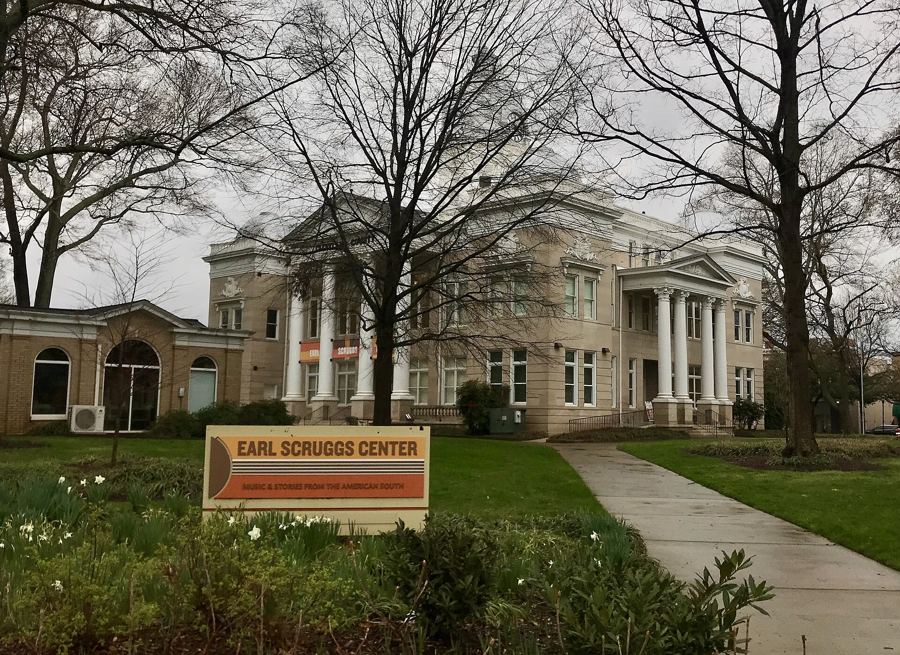
A boy from a farm near Shelby changed how the banjo is played. In his county's old courthouse, a museum now explains the rolls, the records and the foothill string bands behind them.
- Five-string banjo in rolling three-finger patterns
- Spring and autumn weekends