Track 07 THE WEST
- Sound
- Fiddles, banjos, drums and buskers
- Loudest
- Summer Friday and Saturday evenings
- Best months
- May to early October
- Getting there
- I-26 or I-40; walk downtown
- Bring
- Walking shoes, a blanket for the lawn, small change
Asheville's street corners and summer nights
Downtown Asheville sounds different on every block: a fiddler outside a doorway, drums in a small park, a string band on a big outdoor stage. In summer, the whole centre becomes a listening room.
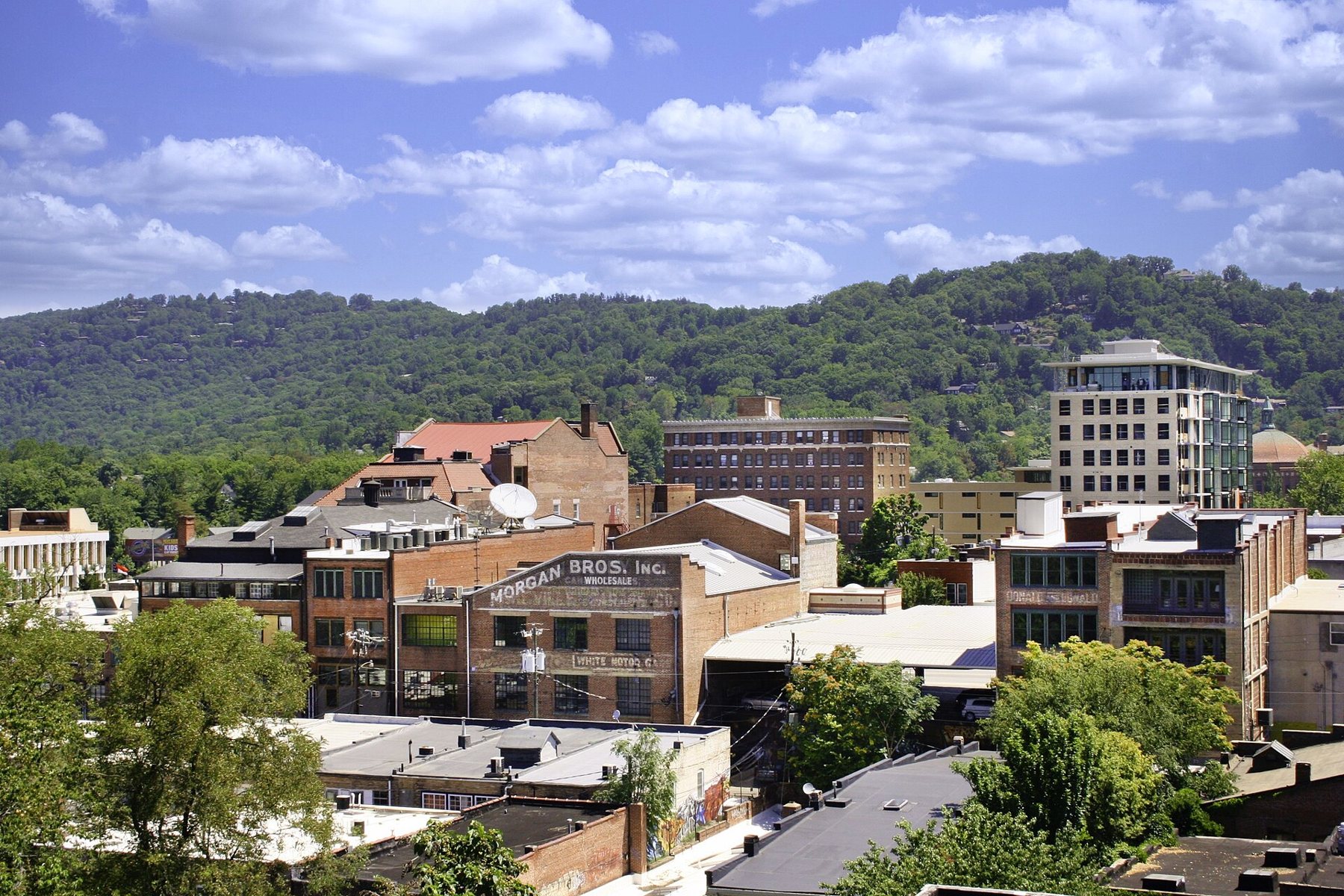
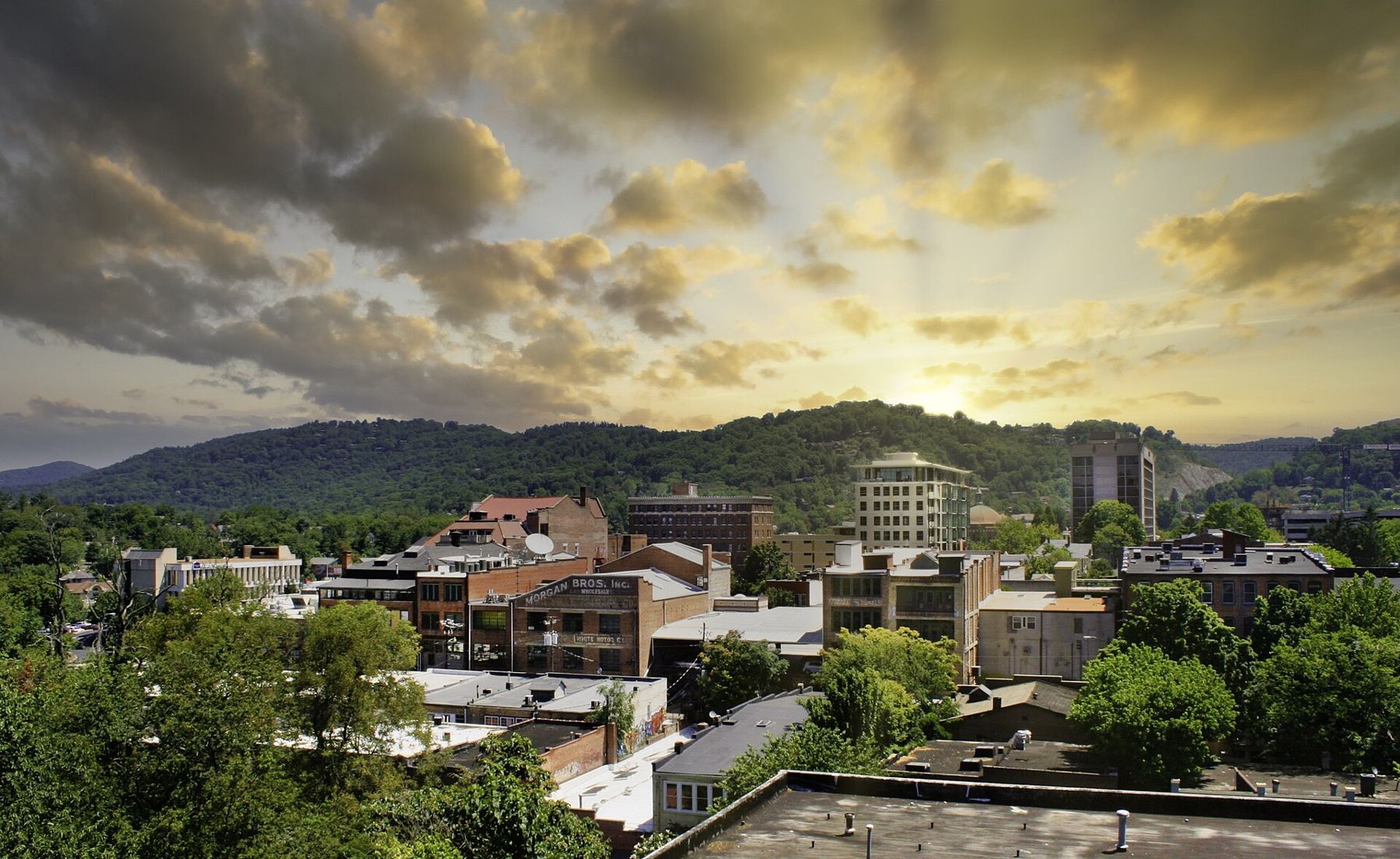
Asheville sits in a bowl of mountains where the French Broad and Swannanoa rivers meet, and its downtown is a tight knot of brick and stone on a ridge above them. On a warm evening the streets are full of people, and between the traffic and the conversation you can hear music from almost every direction. A fiddler plays outside a closed shopfront. A banjo and a washboard work a corner. Two blocks away, a crowd of drummers keeps a groove going in a small park while people dance around them.
This is not just a tourist sideshow. Asheville has been a gathering place for mountain music for a century, and it was here, in 1928, that one of the oldest folk festivals in the country began. The street music you hear today grows out of that tradition, mixed with everything else the city has picked up since.
Set one: the buskers of downtown
Busking in Asheville is a fixture of the warm months, from late spring into autumn. The players set up along the busiest pedestrian streets of downtown, in doorways, at corners and at the edges of small plazas, and their range is wide. On one walk you might hear an old-time fiddle and banjo duo, a solo bluegrass guitarist, a singer with a harmonium, a jazz trio and a teenager working through a first set of fiddle tunes.
The best times are late afternoon and evening on Fridays and Saturdays, when the most people are out. Weekday evenings in summer are quieter but often better for listening, because you can stand close and actually hear. The city sets rules for street performers about where they may play and how loud, and most players move around through the day. There is no fixed programme, which is part of the pleasure: you walk until something stops you.
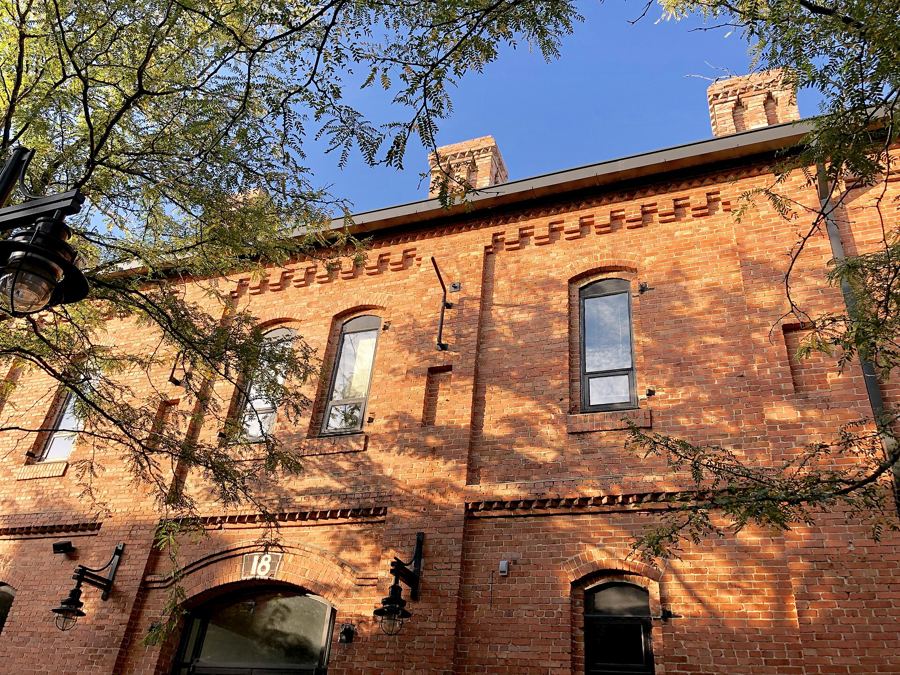
Downtown is compact enough to cover on foot in an hour, and the streets are lined with older commercial buildings, many from the 1920s, which give the sound a pleasant echo. Pack Square and Pritchard Park are the two open spaces at its heart, and both have their own music.
Listen for how the mountain sound threads through the rest. A busker playing jazz standards on a clarinet may switch to an old fiddle tune when a family stops to listen, and a young guitarist covering a pop song may finish with a ballad learned from a grandmother. The old music is not kept apart from the new here; it is simply part of what the city plays.
Pritchard Park on a Friday night
Pritchard Park is a small, triangular open space in the middle of downtown, with steps, a few trees and room for a crowd. On Friday evenings in the warmer months it fills with drummers. The drum circle has been a downtown fixture for many years, and it works on simple rules: anyone can bring a drum, anyone can join, and anyone can dance.
The sound is nothing like a fiddle tune. Dozens of hand drums, shakers and bells lock into a long, rolling rhythm that builds and fades for hours, with a few people dancing in the middle and a wider ring of listeners around the edges. It is loud, loose and friendly, and it draws families, students, travellers and older regulars alike. If you have a drum, bring it; if not, watch for a while and let the rhythm do the work.
The circle depends on the weather and the season, and like all informal gatherings it can change. Check before you go if you are making a special trip.
Track 06 · HIGH COUNTRYOld theatres that still host Saturday showsSaturday nights on the green at Pack Square
A few blocks east, Pack Square Park stretches east from the old square, past the art deco city hall and county courthouse. It is the city's main public lawn, and in summer it holds one of Asheville's most loved traditions: a long-running outdoor evening of mountain music and dance that has gathered on summer Saturday evenings for decades. The stage at the park's lower end carries the name of Bascom Lamar Lunsford, the man who started the city's folk festival.
The format is simple and has hardly changed. String bands, ballad singers and dance teams take turns on the stage, and the audience sits on blankets and folding chairs on the lawn. Around the edges, under the trees, informal jams form and dissolve all evening, and you can wander from one to another. When the dance teams come on, the clogging is fast and loud, and big circle dances sometimes spill onto the grass. Our guide to the mountain square dance and clogging explains what you are watching.
There is no fixed programme, which is part of the pleasure: you walk until something stops you.
Dates and times change each season, and some evenings are cancelled for weather. Check before you go, arrive early to find a spot on the lawn, and bring a light jacket, because mountain evenings cool quickly.
The festival that started in 1928
The Mountain Dance and Folk Festival began in Asheville in 1928, and it is often called the longest-running folk festival in the country. It was founded by Bascom Lamar Lunsford, a lawyer and song collector from Madison County who spent his life gathering ballads, fiddle tunes and dances from the mountains and bringing the people who played them to a public stage.
The festival still follows his idea. Over a few summer nights, traditionally in early August, it presents local string bands, ballad singers, banjo players, clogging teams and big circle dancers, almost all of them from the mountains of western North Carolina. It is not a showcase for stars; many of the performers are families who have taken part for generations. Dance teams have appeared since the early years, and the festival stage did much to turn the big circle dance and team clogging into the polished, precise forms you see today. In recent years it has been held indoors in downtown Asheville. Venues and dates change, so check before you go.
If you are visiting in early August, the festival is the best way to see the whole range of the region's traditional music and dance in one place. Our guide to the festival year sets it alongside the region's other summer events.
Last set: listening well in the street
Street music runs on goodwill. Stand to one side so that you do not block the pavement, and keep a little distance from the players. If a busker holds your attention for a full song, put something in the case; that is how the musicians make their living. Ask before you film anyone up close.
At the drum circle and the outdoor dances, join in if you want to, but follow the lead of the people who are already there. In the jams around Pack Square, the same rules apply as at any jam: listen first, ask before joining, and play quietly.
Asheville is a good base for the rest of the mountains. From here, the Blue Ridge Music Trails lead out to small-town jams and halls in every direction, and the old-time country of the northern counties is a few hours' drive away. Our story on a Friday jam in a mountain county seat describes what you will find when you get there.
Next on the setlist
The mountain square dance and clogging
In the mountains west of Asheville, a dance is still a community event: one big ring of couples, a caller with a strong voice, and a string band that will not stop until the floor is empty.
- Fiddle band, caller and tapping feet
- Summer Saturdays and early autumn
The Piedmont blues of Durham's tobacco warehouses
A light, rolling, finger-picked blues grew up on the sidewalks outside Durham's tobacco auctions in the 1930s. The warehouses still stand, and the sound still turns up when the weather cools.
- Finger-picked guitar, harmonica and washboard
- Late summer into autumn